Creative Cambridge 2026
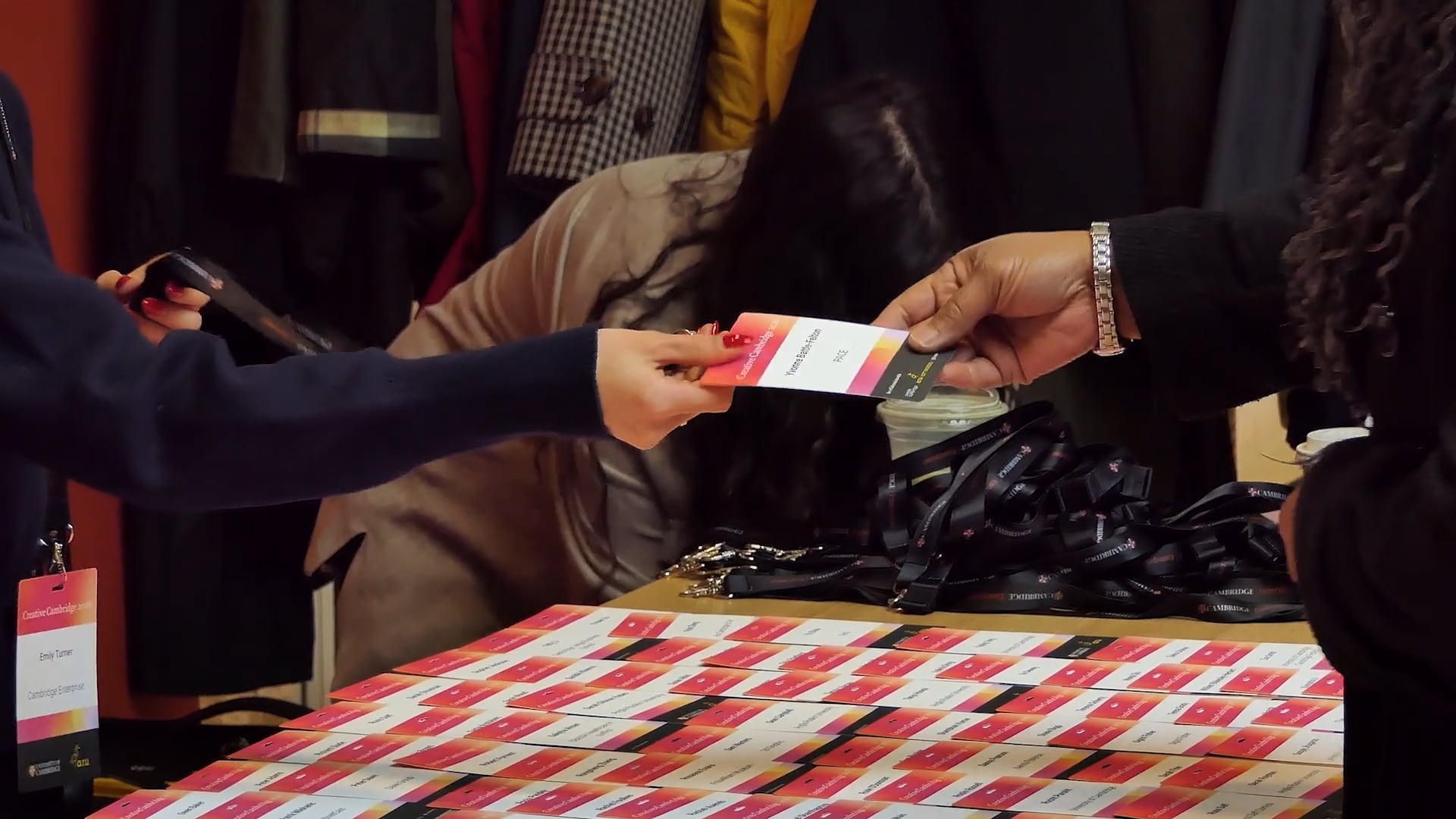
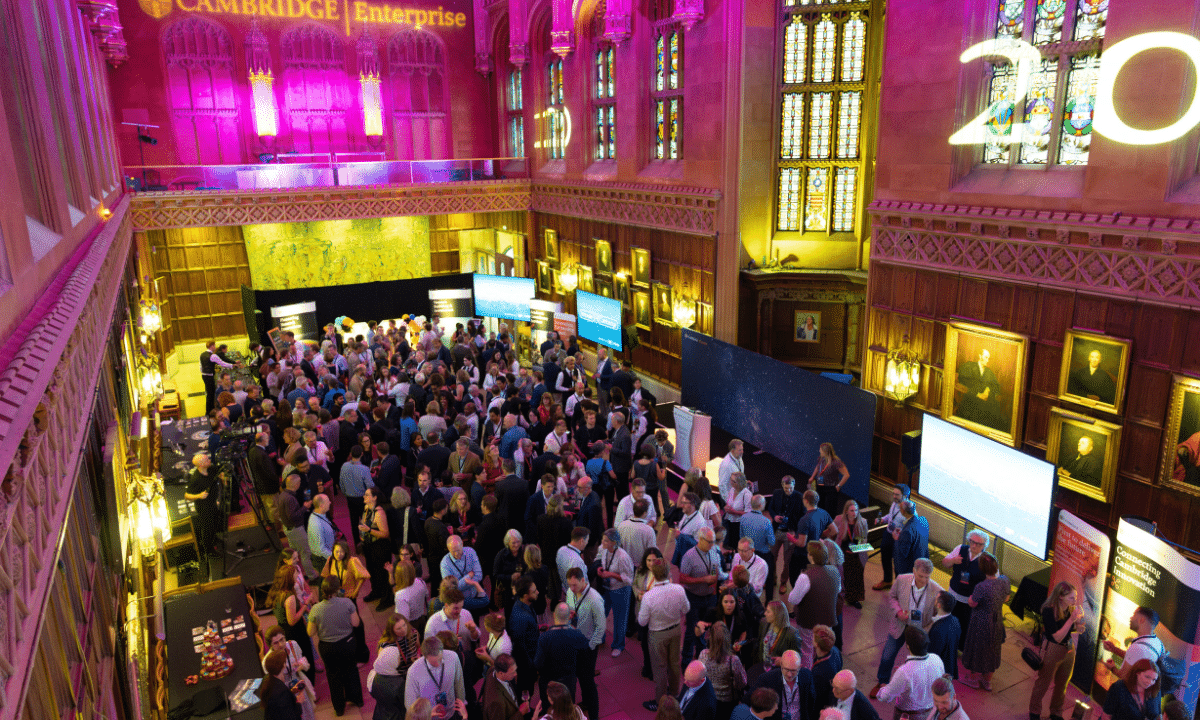
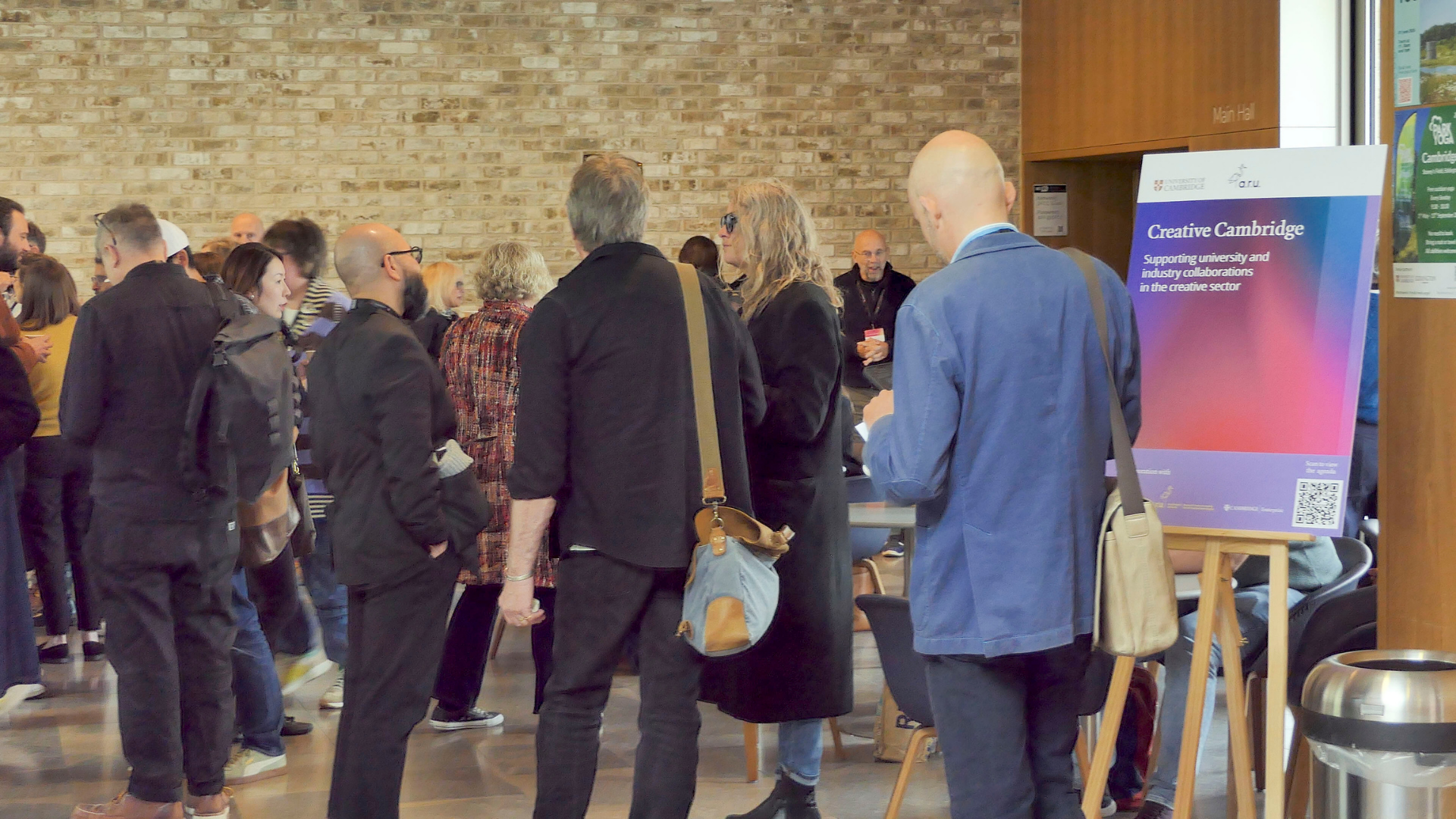
Creative CambridgeCreative Cambridge is an annual conference hosted by the University of Cambridge and Anglia Ruskin University (ARU), in collaboration with Create Cambridge, Cambridge Enterprise and ARU’s Research Centre for Media, Arts and Creative Technologies, bringing together researchers, creatives and industry to explore collaboration across the city’s cultural and creative sectors.
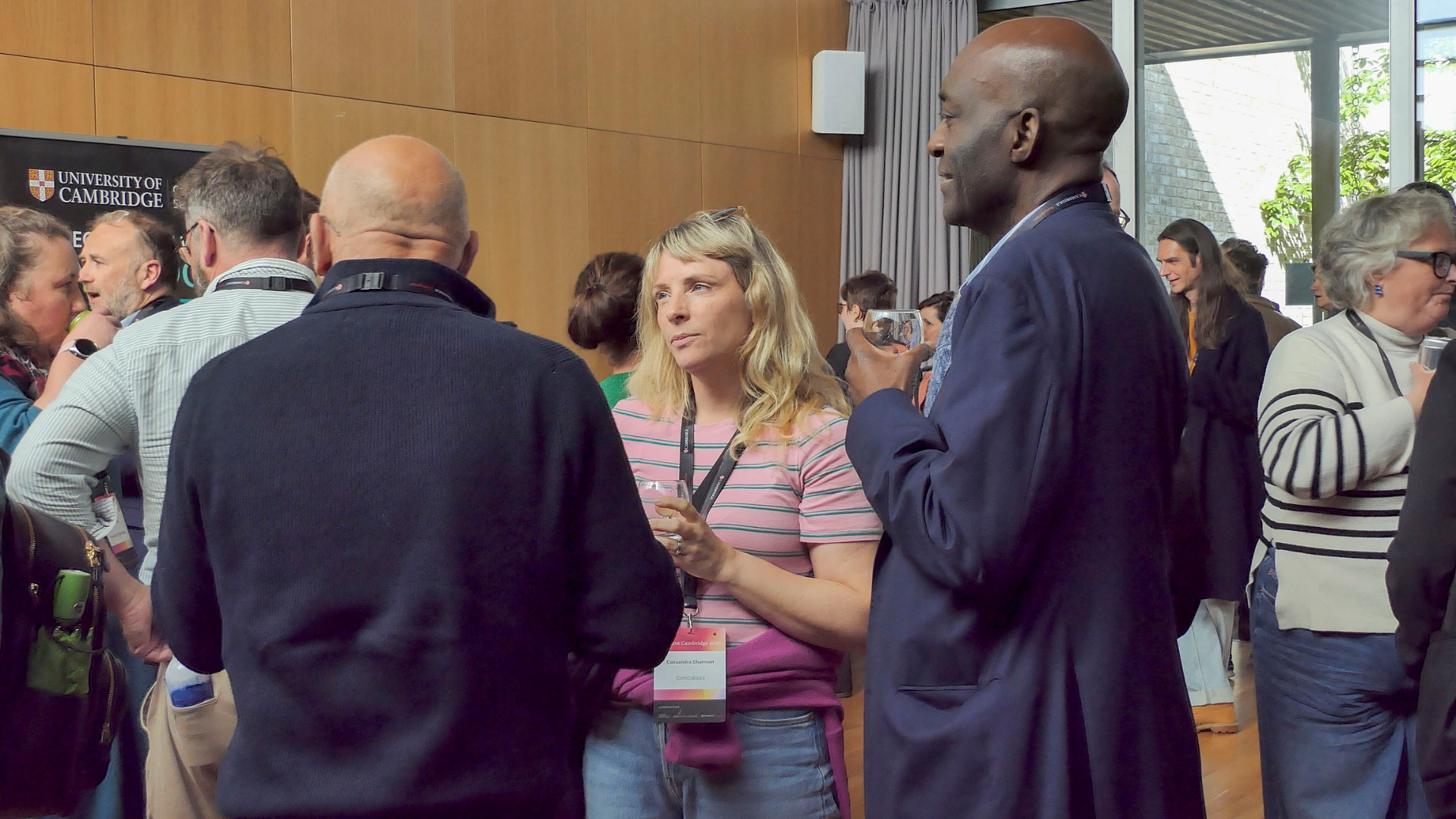
This year’s event featured a wide range of voices for a day of panels, discussion and informal conversation. From the first session through to the final exchanges, there was a strong focus on sharing ideas openly and creating opportunities for collaboration beyond the event itself, with participants encouraged to connect, reflect and contribute to ongoing conversations shaping the city’s creative future.
Introduction and provocation
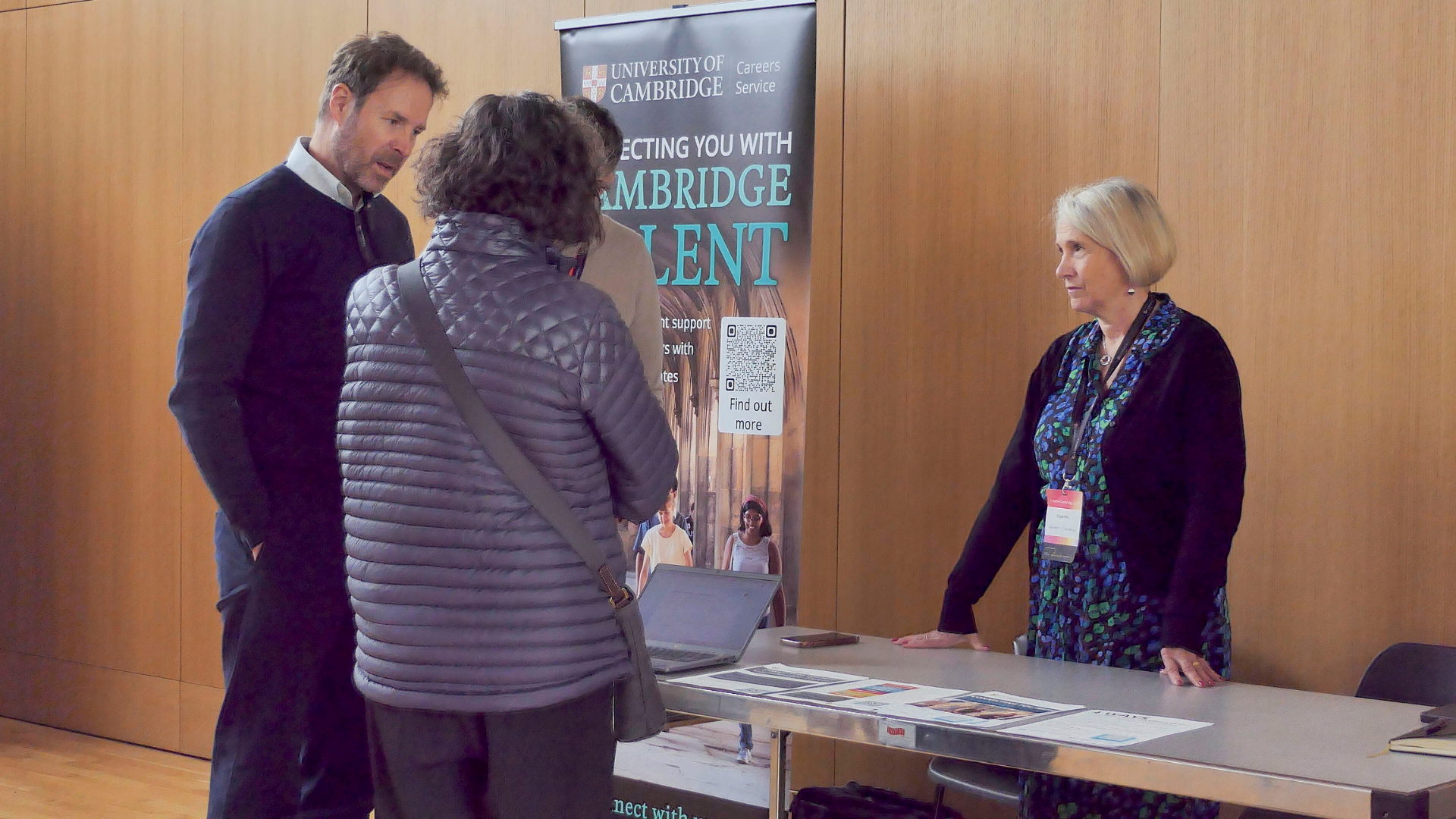
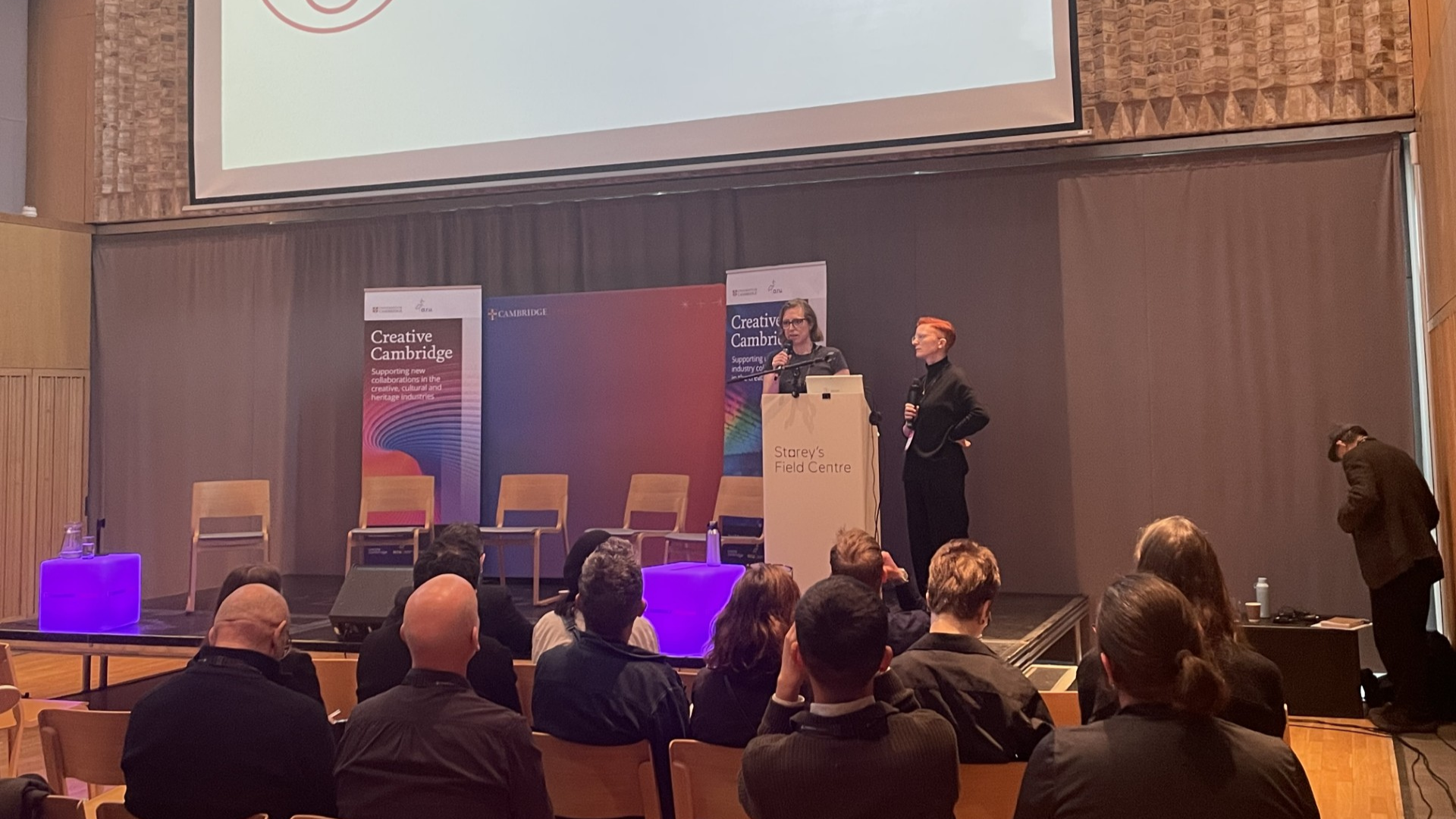
The day opened with a welcome from Dr Emma Salgård Cunha who reflected on how the event has grown from a small gathering into a now well-established conference built on long-standing partnerships across Cambridge’s creative community. Co-convener Dr Lucy Sheerman then set out the intention for the day, emphasising that Creative Cambridge is not just about discussion but about sparking conversations that lead to real activity and collaboration. This year’s event focused on the idea of the ‘creative city’, with a provocation from Sarah Wood and Idit Nathan inviting attendees to imagine Cambridge’s future more freely and contribute their own ideas from the outset.
“We really wanted today to help us think more clearly about what a creative city looks like.”
Dr Lucy Sheerman, Impact Facilitator, Arts & Humanities, University of Cambridge

Panel 1
Inclusive Innovation: What makes a creative city?
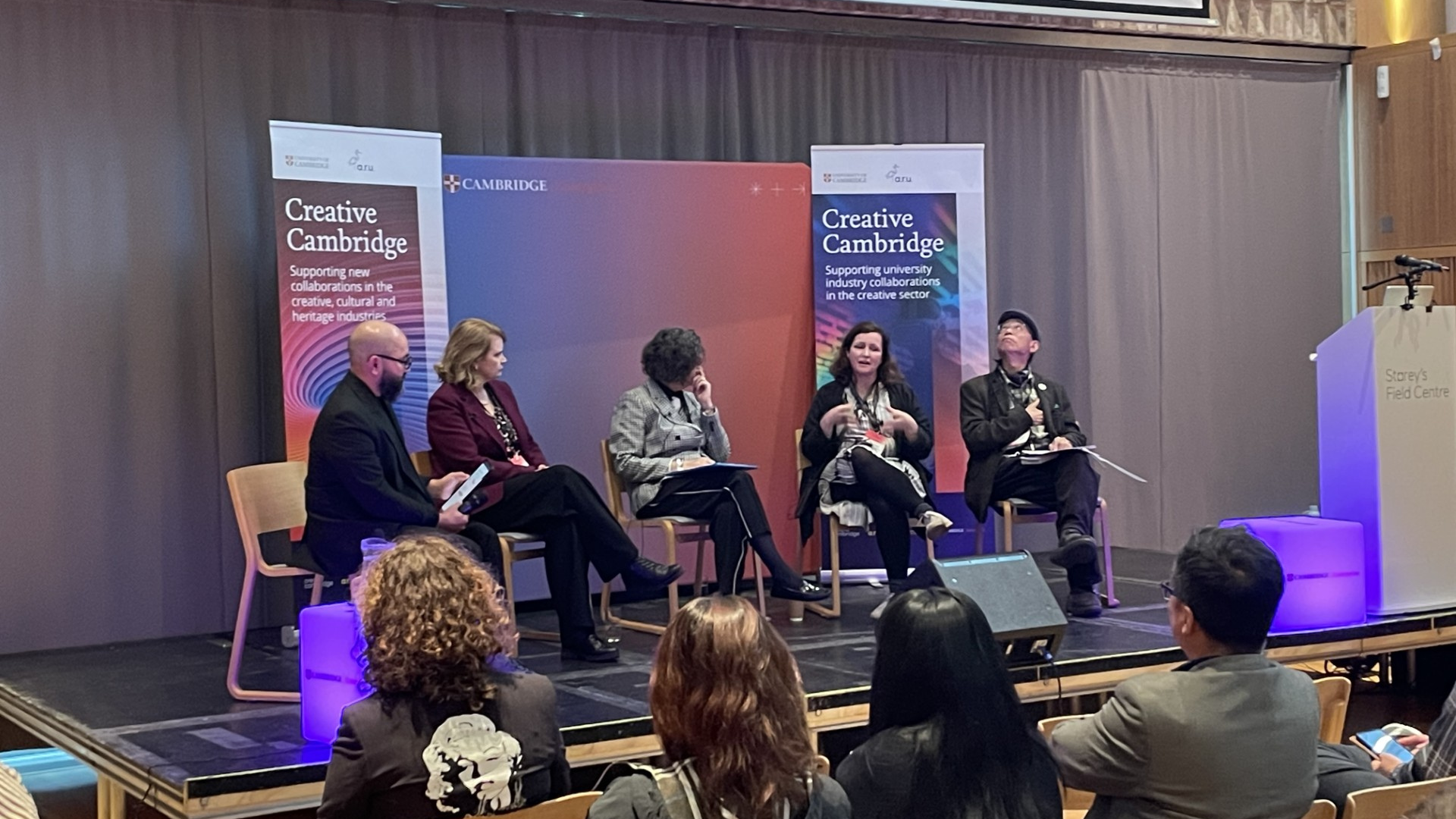
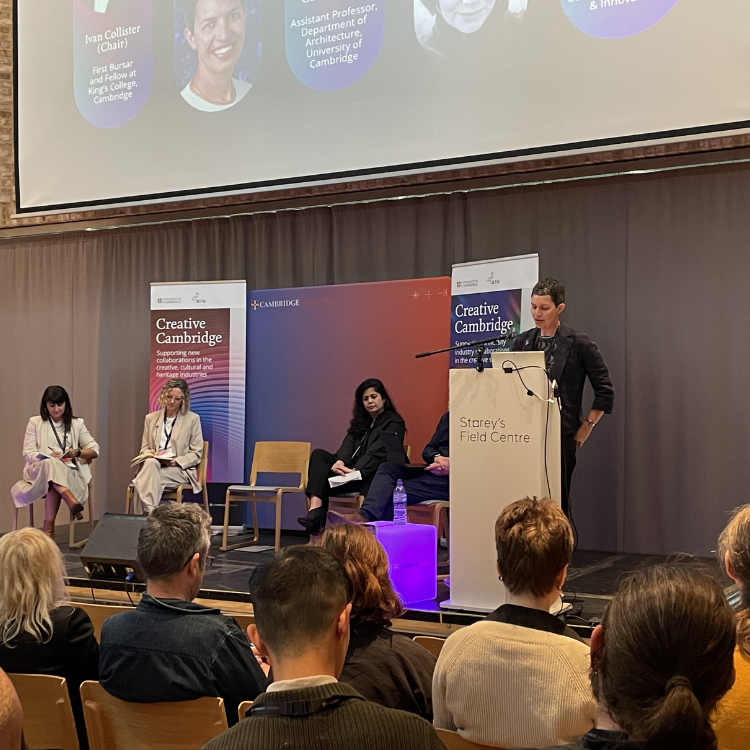
The opening panel explored how Cambridge can become a more inclusive and creative city at a time of significant growth. Chair Ivan Collister framed the discussion around how cultural and creative activity can be embedded into the city’s expansion, not as an add-on but as a core part of shaping a more liveable and connected place.
Drawing on experience from large-scale regeneration projects, Eleanor Fawcett highlighted the importance of recognising and supporting existing creative communities rather than displacing them. Examples from Hackney Wick and Park Royal showed how mapping creative activity, connecting communities with decision-makers and embedding creative space into planning can help ensure creativity grows alongside development. For Cambridge, this pointed to the opportunity to better connect institutions, developers and local creative networks, moving from fragmented activity towards more coordinated collaboration.
The panel also explored how both physical space and partnerships shape creative exchange. Dr Michal Gath-Morad’s research showed how informal spaces often enable the most meaningful interactions, raising questions about how the city can better support these encounters. Alongside this, Catherine Kerfoot and Nema Hart emphasised that meaningful collaboration requires time, shared ambition and a willingness to share risk, with no single organisation able to deliver this alone. A clear message throughout was that inclusion must be built in early, by involving communities, recognising what already exists and creating the conditions for it to develop, rather than introducing it later.
Our panellists:
Ivan Collister (Chair) | First Bursar and Fellow, King's College, University of Cambridge
Eleanor Fawcett | Chair, Greater Cambridge Design Review Panel
Dr Michal Gath-Morad | Assistant Professor, Department of Architecture, University of Cambridge
Nema Hart | Director of South West and Inclusive Innovation, Arts Council England (ACE)
Dr Catherine Kerfoot | Programme Director for Creative Industries, UK Research and Innovation
“To truly embed inclusion, it needs to be considered from the beginning, not as an add-on, with culture and creativity shaping how people live and work.”
Panel 2
Creative Ambition: Create Cambridge Commissions
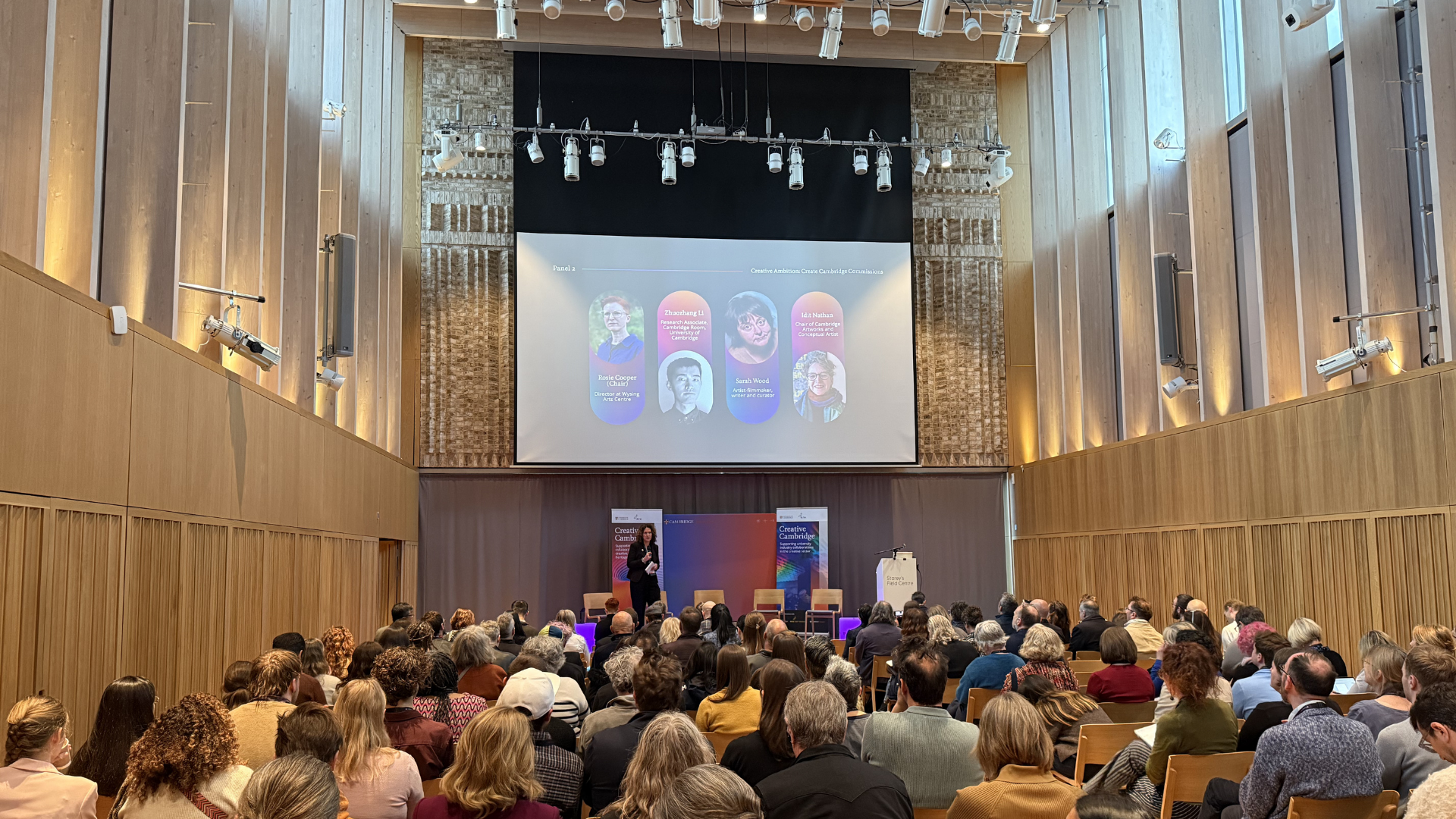
The second panel brought together commissioned artists whose work formed part of a wider consultation shaping the future of Cambridge’s cultural landscape. Over several months, artists and creative freelancers had come together to share honest reflections on their experiences, challenges and ambitions for cultural life in the city, with this panel, chaired by Rosie Cooper, offering a chance to present that work and the ideas behind it.
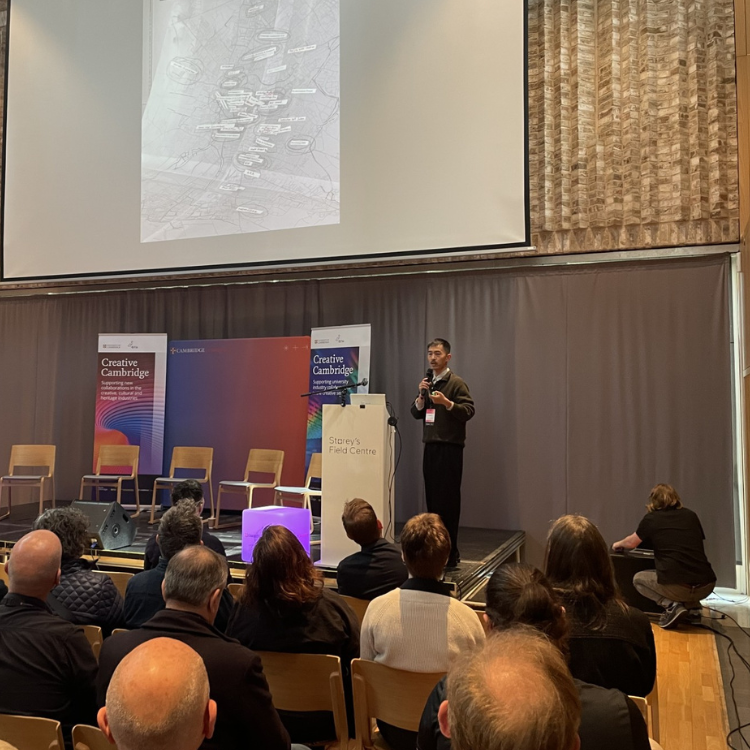
Through film, installation and a collaboratively developed manifesto, the panel presented a range of perspectives grounded in these discussions. Sarah Wood and Idit Nathan’s film drew on artist-to-artist conversations to explore ideas of openness, imagination and experimentation, while Zhuozhang Li shared a collective manifesto that challenged existing structures and called for greater connection, visibility and access. Across these works, a clear emphasis emerged on recognising artistic practice as a process rather than a finished output, and on creating more opportunities for exchange across the city.
The discussion expanded on these ideas, highlighting both opportunities and ongoing challenges. Speakers reflected on the need for more accessible space, better infrastructure and greater visibility for a wide range of creative practices, alongside the importance of supporting risk, experimentation and different ways of working. A consistent theme was the need for a more connected and inclusive ecosystem, where artists are not only included in conversations about the city’s future but supported to actively shape and sustain it over time.
Our panellists:
Rosie Cooper (Chair) | Director of Wysing Arts Centre
Zhuozhang Li | Research Associate, Department of Architecture, University of Cambridge
Sarah Wood | Artist-filmmaker, writer & curator
Idit Nathan | Conceptual Artist
“We ask for connection, not isolated excellence. We want a city that embraces risk, imperfection and experimentation.”
Demo
Fen to Fire
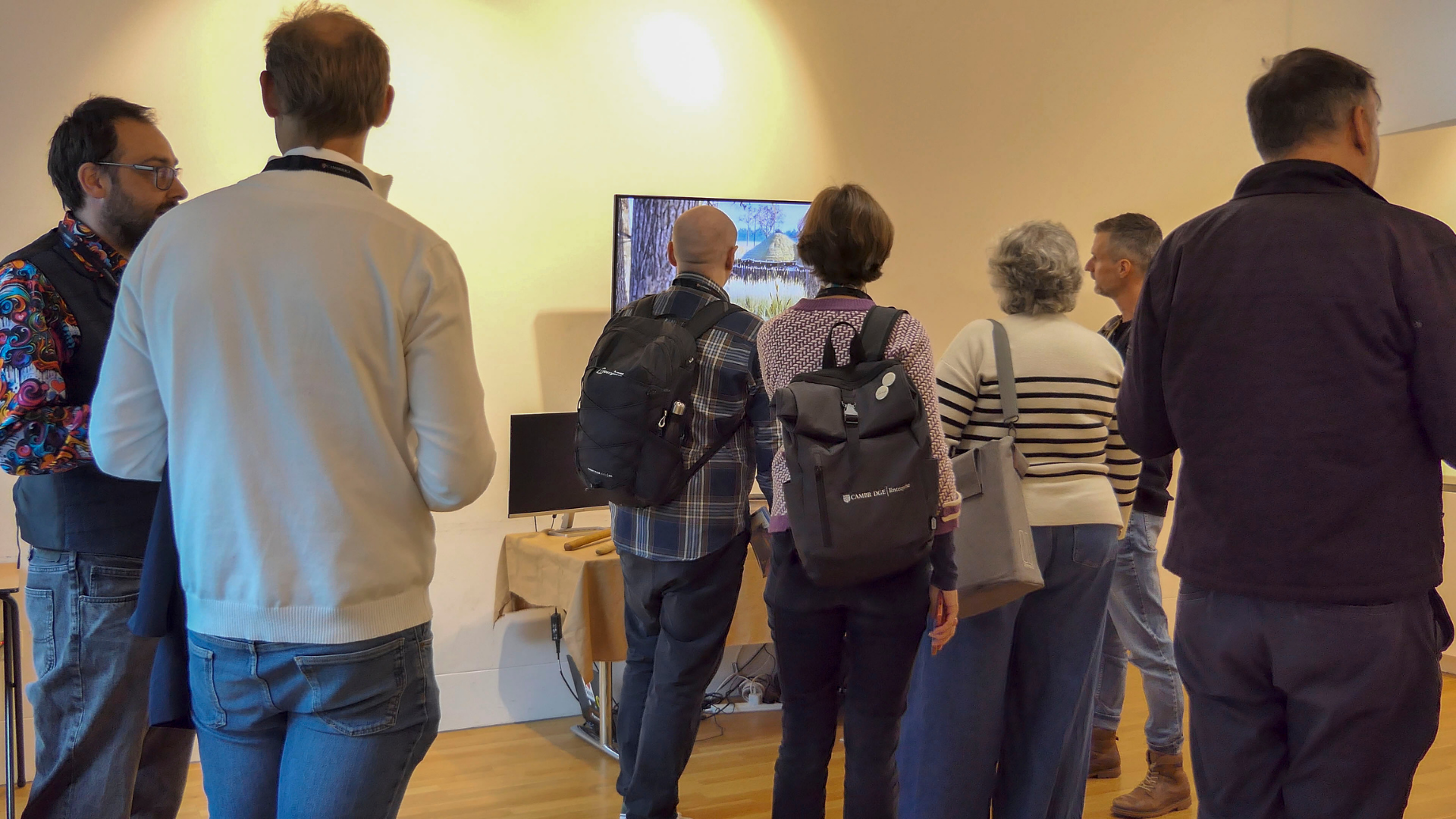
As part of the event, attendees also had the opportunity to explore Fen to Fire, a recent project from Collusion presented by Guy Schofield and Chris Wakefield. The installation uses immersive digital techniques to bring the Late Bronze Age Must Farm settlement in the Cambridgeshire Fens to life, combining archaeological research with photorealistic visualisation to explore how people lived and what may have happened when the site was destroyed by fire.
Developed in collaboration with young people from the region, the work brings together storytelling, technology and community engagement, with participants contributing to character design, motion capture and sound. The result is a multi-screen installation that moves between past and present, offering both an immersive experience of daily life in the settlement and insight into the creative process behind the project.
Fen to Fire was first initiated through the University of Cambridge’s AHRC IAA funded SHAPE Hub initiative, which provides a collaborative programme to allow arts and humanities researchers to engage more authentically with artists and to explore creative and digital arts methods within research enquiry and dissemination.
Panel 3
Art Tech & The City – with international perspective
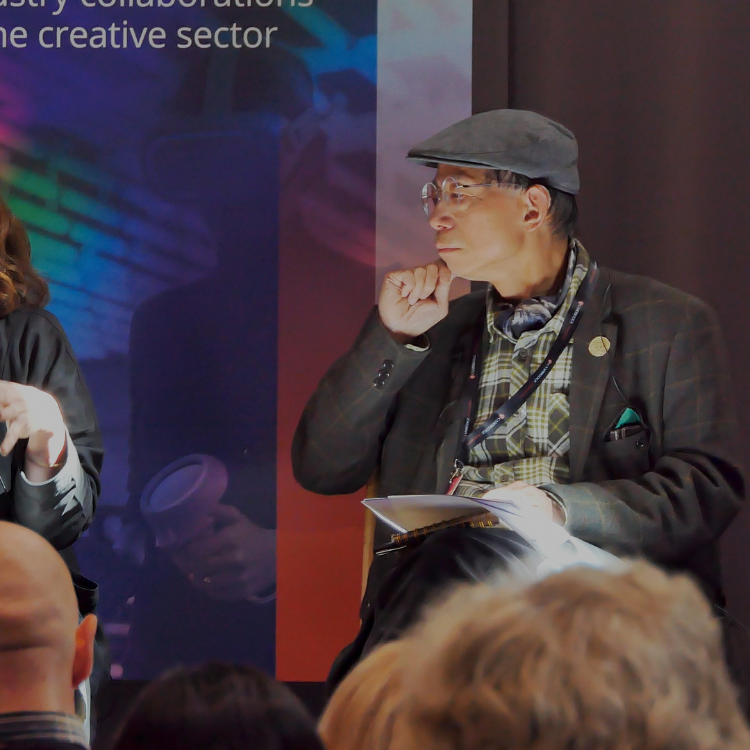
The final panel brought together perspectives from across design, technology, industry and research to explore how creative and technological practices are shaping cities today. Chaired by Dr Idrees Rasouli, the discussion featured Elizabeth Donnelly, Lena Milosevic, Professor Ho Law and Brgs Lenz-Giarlis, and built on earlier themes, focusing on how art, technology and civic life intersect in practice, and what this means for a city like Cambridge as it navigates rapid growth and innovation.
Rather than treating art, technology and the city as separate domains, the panel emphasised the value of bringing them together in more integrated and human-centred ways. Speakers reflected on how these intersections can drive new forms of creativity and collaboration, while also highlighting the risk of overly technical or data-driven approaches. Contributions explored how design, storytelling and inclusive practice can help foreground human experience, ensuring that cities are shaped not only by technological capability but by belonging, identity and everyday lived experience.
A key theme throughout the discussion was the importance of inclusion and participation, both within organisations and at a city-wide level. Panellists highlighted the need to distribute leadership, create opportunities for informal exchange and recognise the value of diverse perspectives in shaping innovation. Alongside this, there was a clear call to move beyond viewing creativity as an add-on, instead embedding it as a core part of infrastructure, from urban design to community spaces. While challenges remain around funding, access and coordination, the panel pointed to the opportunity for Cambridge to better connect its strengths in technology and research with more open, creative and inclusive approaches to city-making.
Our panellists
Dr Idrees Rasouli (Chair) | Associate Professor of Design & Urban Innovation and Chair of DesignLab, Anglia Ruskin University
Elizabeth Donnelly | Board Advisor at Elizabeth Donnelly Advisory
Lena Milosevic MBE | Global Director, Culture and Inclusion, AVEVA
Professor Ho Law | Professor of Research & Psychology and Founder Director of EMPSY LIMITED
Brgs Lenz-Giarlis | Architect and Co-Founder of NEUBAU (NOY-bow) Architecture and Objects
“We've forgotten that a city's health is measured by its citizens' sense of belonging, self-identity, aspirations, hope and dreams, not just the speed of broadband.”
Roundup
Create Cambridge Cultural Compact
The closing session signalled progress and next steps for the Create Cambridge Cultural Compact. Rosie Cooper and Rachel Drury reflected on a process spanning nearly two years, uniting cultural organisations, universities, businesses and public stakeholders around a shared approach for the city’s creative future.
Drawing on a wide-ranging consultation, the focus was on building a more connected and inclusive cultural ecosystem, with artists, creatives and communities at its centre. Key challenges included access to space, sustainable funding and the need for stronger collaboration across the sector.
The draft plan outlined priorities around inclusive growth, innovation, health and wellbeing, and space and infrastructure. It also introduced a more regionally connected view of Cambridge, recognising the need to move beyond a city-centred perspective and better integrate surrounding communities.
Looking ahead, the next phase will focus on refining the plan and building the capacity needed to deliver it, ensuring creative practice is embedded as a core part of how Cambridge grows.
Rosie Cooper | Director, Wysing Arts Centre
Rachel Drury | Co-Founder & Director, Collusion
Looking back at Creative Cambridge 2026
Thank you to all our speakers, panellists and attendees who contributed to making Creative Cambridge 2026 such a thoughtful and engaging day. From the opening conversations through to the final reflections, the event brought together a wide range of perspectives on how creativity, research and collaboration can shape the city’s future. For those who joined us, we hope the discussions continue beyond the day and for those who couldn’t attend, the video below offers a chance to explore some of the key moments and ideas shared throughout the event.