Advancing gene and cell therapy performance
VenturesHoudini Bio has emerged from stealth, raising around £1.5 million through a combination of non-dilutive grant funding and an oversubscribed pre-seed round.
The round was led by SCVC, with participation from Deep Science Ventures and Cambridge Enterprise Ventures. Houdini Bio develops software that redesigns therapeutic DNA to help it evade the body’s natural defence mechanisms.
The body’s defence system is at the heart of this story. A protein complex called HUSH often confuses the DNA used in gene and cell therapies with a virus and turns it off. This is why treatments that succeed in trials can lose effectiveness in real-world use.
“Cellular machinery still rejects these therapies, limiting long-term effectiveness and forcing costly, unsafe doses. Our platform introduces a vital shift from trial-and-error screening to repeatable, engineering-driven DNA design,”
Jonathan Cohen-Gold, Chief Executive at Houdini Bio
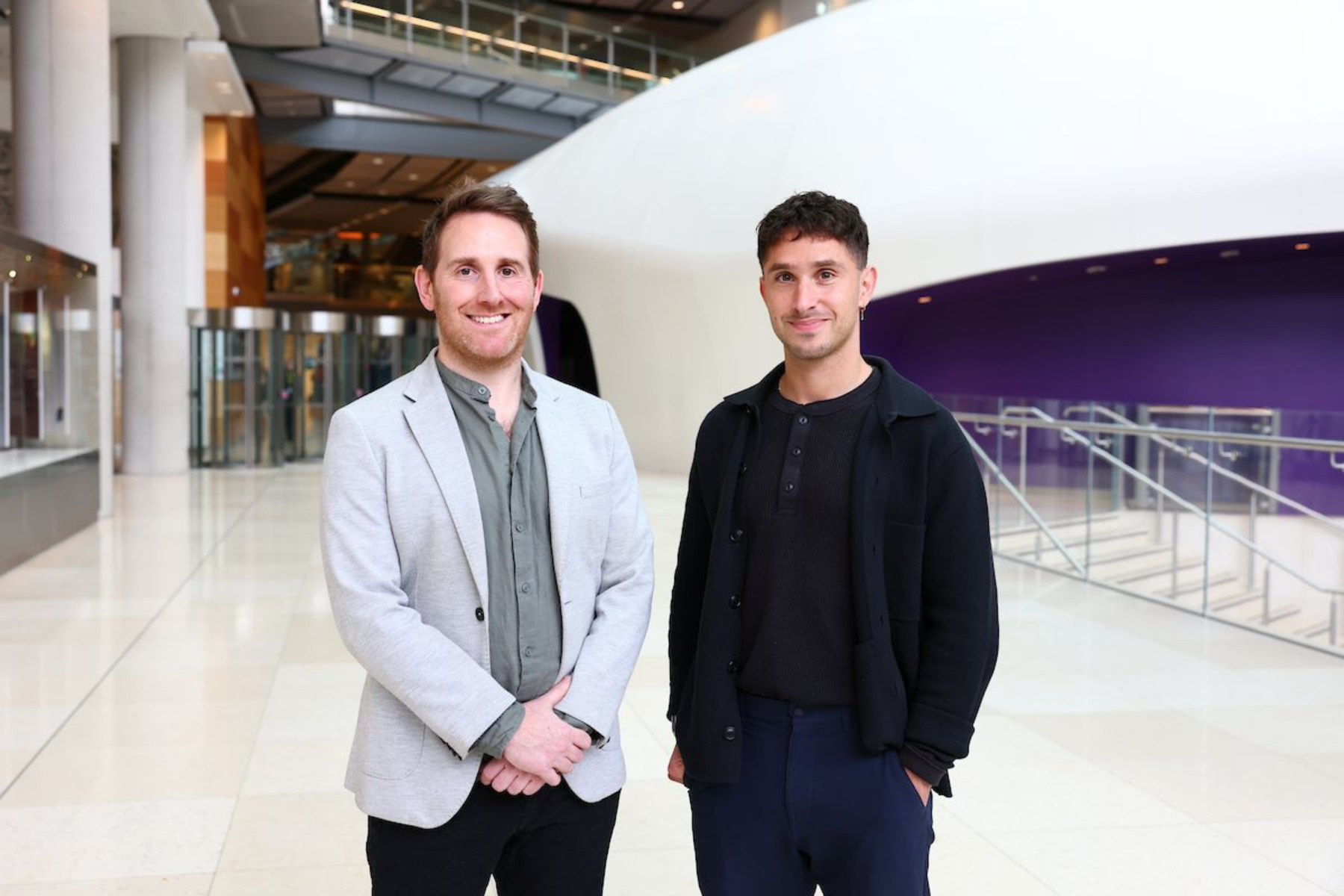
Houdini Bio co-founders Lee Dunham (left) and Jonathan Cohen-Gold (right). Image credit: Houdini Bio.
A Cambridge discovery sparked this innovation
Jonathan Cohen-Gold discovered the molecular workaround during his PhD at the University of Cambridge, building on Professor Paul Lehner’s identification of the HUSH complex.
He co-founded Houdini Bio in 2023 with Lee Dunham, the chief business officer, who spent over ten years working with more than 100 cell and gene therapy companies as a director at the Cell and Gene Therapy Catapult. Dunham has seen first-hand why promising therapies sometimes fail.
Founded in 2025 as a spinout from the Department of Medicine at the University of Cambridge, the startup uses machine learning to analyse a therapy’s genetic sequence before it reaches patients. This helps predict which DNA versions can bypass HUSH’s defences and remain active.
For example, a CAR-T therapy, which re-engineers a patient’s immune cells to fight cancer, often loses strength within weeks because the inserted gene is silenced. With Houdini Bio’s approach, such therapies could stay active longer at lower, safer doses.
We are excited to have participated in this round and look forward to continuing to support the team at Houdini Bio as they grow, scale and develop partnerships with pharmaceutical companies.