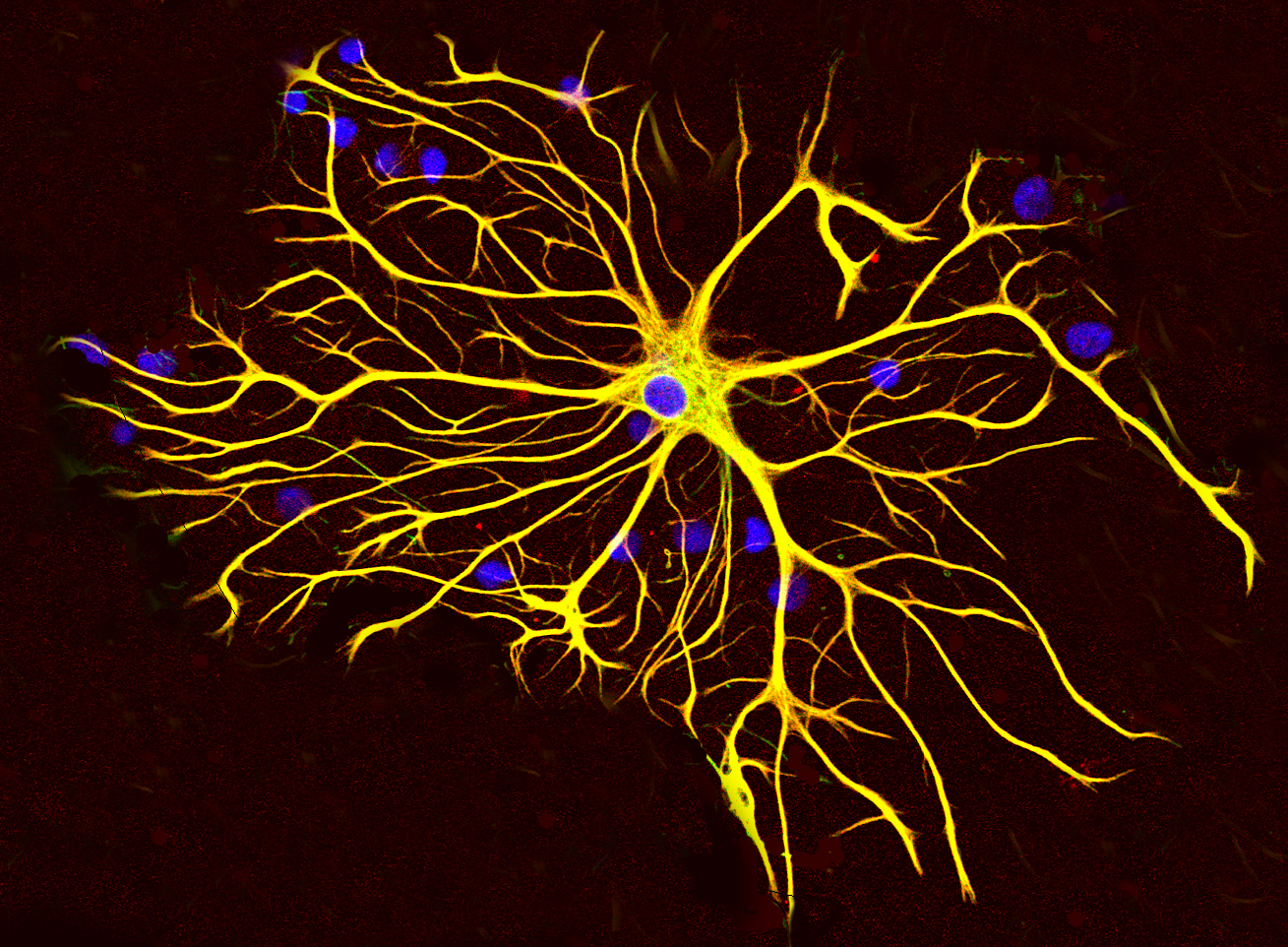
How astrocytes shape brain health
Technology Investment FundProtecting astrocytes may offer a new therapeutic approach to slowing down disease progression, complementary to existing treatments, fulfilling a clinical unmet need.
A translational study published in Experimental Neurology suggests a new experimental therapeutic approach to slowing down Parkinson’s disease progression.
The work, led by the University of Cambridge and its spinout Cellestial Health, in collaboration with the University of Manchester among others, shows that communication channels connecting astrocytes – a type of brain cells – break down in laboratory models of Parkinson’s in rodent and humans.
The multi-institutional study was designed and ordinated by Dr Nataly Hastings, who initiated the research project as a postdoc researcher at the University of Cambridge, and now leads the University spinout company Cellestial Health. The company has been supported by Cambridge Enterprise with a Technology Investment Fund award to partly fund this work in order to validate new approaches to treatments for Parkinson’s.
Parkinson’s is the fastest-growing neurological condition in the world, affecting over 10 million people. Existing treatments for Parkinson’s help people manage some of the symptoms, such as tremor, but these treatments are not suitable for everyone and don’t stop the disease from worsening over time.
Dr Hastings says:
“Translational research is not only about ‘what goes wrong’ but also about ‘what can we do to make things better’. Our project had a translational approach by design.”
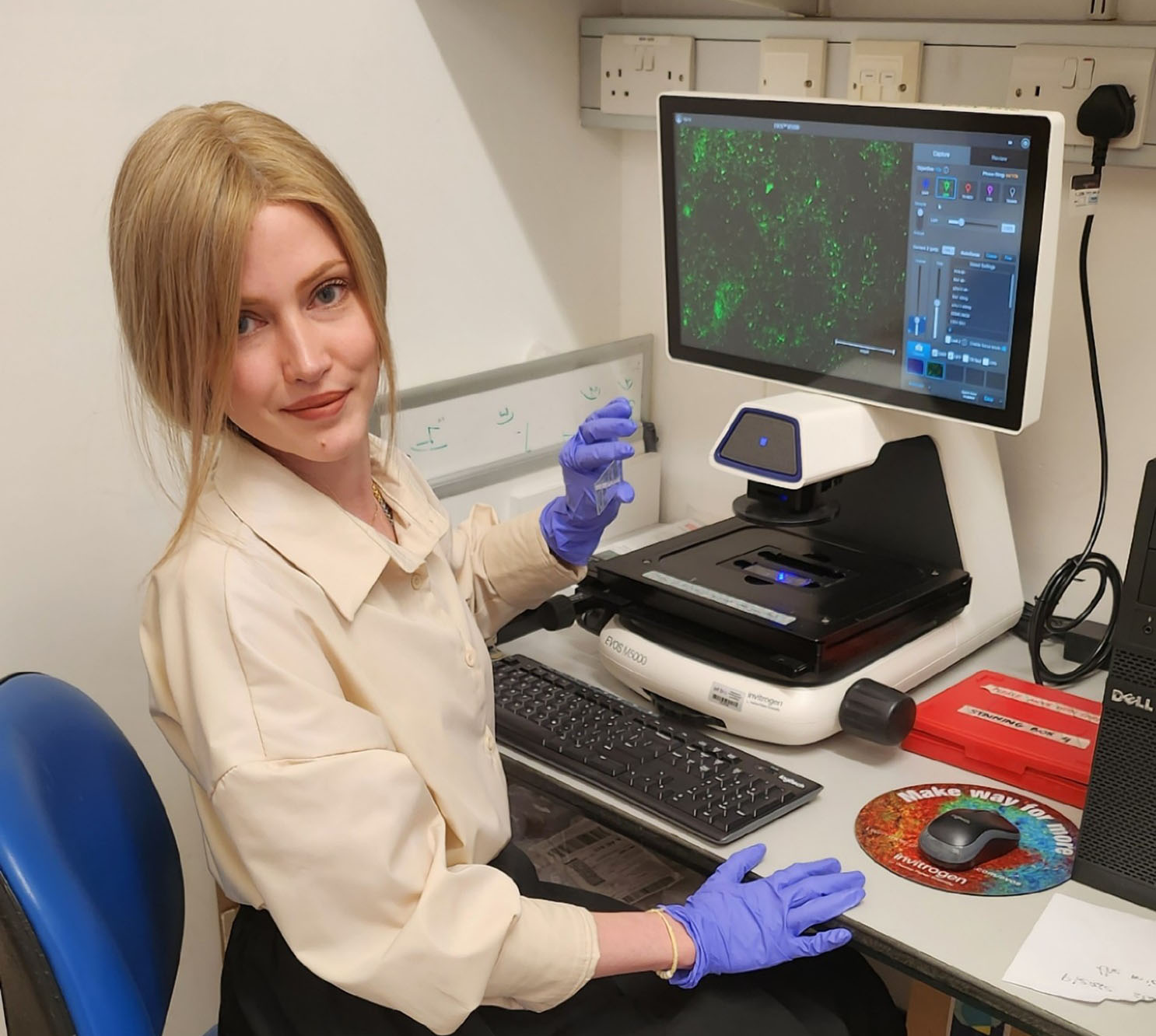
Dr Nat Hastings established many of the protocols for cell culture and microscopic analysis published in the study. Image credit: Dr Nataly Hastings
Traditionally, Parkinson’s researchers have aimed to protect a type of brain cells called neurons, which are known to decline in this condition. This new work shows that a much less well-researched type of cells of the brain – astrocytes – also suffer in human disease-relevant Parkinson’s models, building on the researcher’s previous findings in human brain tissue.
Dr Hastings further ponders: “Scientists have known for over 100 years that the brain is not simply a collection of neurons – neurons only represent around a quarter to a half of the human brain. With this in mind, there doesn’t seem to be a scientific rationale for leaving half of the brain unprotected in Parkinson’s, and that’s why our work focused on other, often overlooked but promising cells – astrocytes.”
Rather than viewing Parkinson’s solely as a disease of neurons and synapses, these new findings emphasise that the communicating networks of astrocytes may also need to be considered for improved disease modification. Astrocytes represent one of the brain’s most abundant cell types; they are becoming recognised as parallel brain networks regulating many functions from acquiring memory to regulating blood-brain barrier.
Dr Saifur Rahman, study co-lead who performed key experiments on cellular signalling, adds: “For years Parkinson’s was treated by replacing lost dopamine, which eases tremor and stiffness but does nothing to stop the disease progressing. In this study we looked at astrocytes instead and found that they lose the connections that normally link them into a working network. When we protected those connections with an experimental drug, it reduced important hallmarks of the disease in models. Our findings point to a genuinely new way to slowing the disease itself rather than just managing its symptoms.”
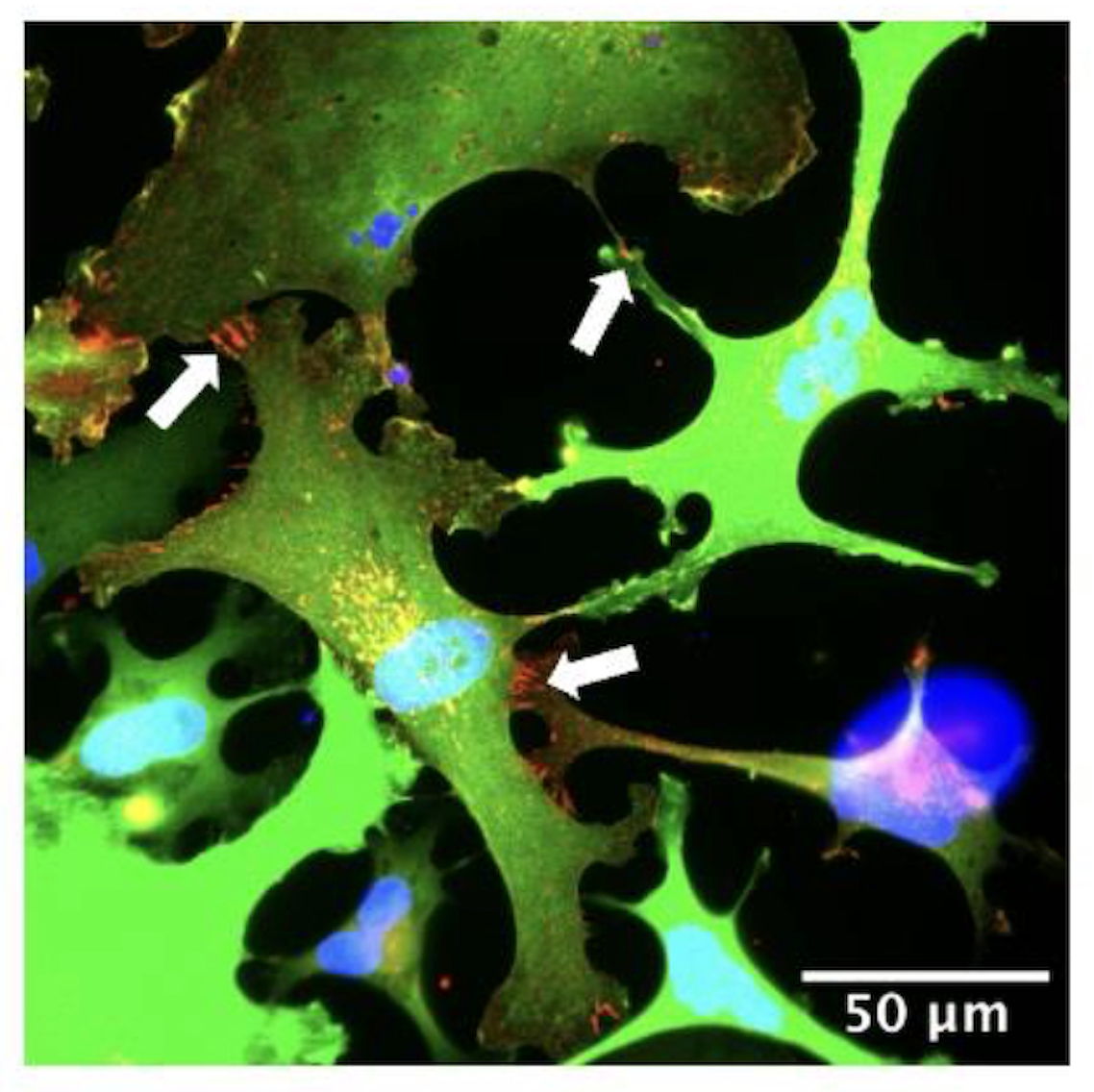
Human-origin astrocytes (green) grown in a Petri dish form targeted communication channels with neighbouring cells via Connexin 43 (red, select connections highlighted with white arrows). These connections decline in experimental models of Parkinson’s, and in human Parkinson’s brains.
The study used two main established methods to induce Parkinson’s-like dysfunction in cells, including those from human origin, and in rodents: inflammation, and aggregation of a protein called alpha-synuclein. Both of these challenges caused functional and structural communication block of astrocytes as they lost cell-to-cell connection points which are called gap junctions.
Connexin 43 is a protein in the body responsible for forming the majority of gap junctions in astrocytes. The researchers found that a decline in this protein, Connexin 43, causes astrocytes to lose the ability to send signals to one another. When Connexin 43 was stabilised using an experimental compound, astrocytic communication was restored, and several Parkinson’s-related traits were reduced. Interestingly, a similar process has previously been shown to take place in the heart and eye, and accumulating experimental clinical evidence suggests that it might be safe to protect gap junctions with minimal to no side effects in people.
The study aims to pave the way for new astrocyte-protective approaches in human Parkinson’s in the coming years. Cellestial Health was formed to pioneer this translational mission with the support of the Cambridge Enterprise Technology Development and Licensing team, who assisted the researchers with patenting the technology and licensing from the University into the company.
Prof Liz Ransey of Carnegie Mellon University, USA, whose lab is dedicated to studying intercellular communication pathways and who was not involved in the study, said:
“This study is exciting because it suggests that disrupted intercellular communication between astrocytes may be an active contributor to Parkinson’s disease pathology, not just a consequence of it. By connecting Connexin 43-dependent astrocyte networks to inflammation and alpha-synuclein pathology, the work highlights cell-to-cell communication as a meaningful and potentially targetable part of disease biology.”
Prof Malú Gámez Tansey, Professor of Neurology; James A. Caplin, MD Chair in Alzheimer’s Research; Director of Neuroimmunology Research at the Stark Neuroscience Research Institute of Indiana University School of Medicine; and President of the World Parkinson’s Congress noted:
“By connecting astrocyte biology, neuroinflammation, and α-synuclein pathology, this study identifies Connexin43-mediated gap junction signalling as an actionable therapeutic pathway. It provides a strong rationale for targeting brain immune responses in a new way through restoration of astrocyte function rather than conventional immunosuppression.”
Prof Tansey was not directly involved with the study but advised the authors on inflammatory aspects of Parkinson’s.
Dr Laura Donelly, Associate Director at Technology Development and Licensing team at Cambridge Enterprise said:
“At Cambridge Enterprise we have been supporting Nataly and her team from the outset and it is encouraging to see the validation of the translational work that Cellestial Health is pursuing. Parkinson’s is a highly debilitating disease, and any steps forward in mitigation of symptoms will be hugely impactful for patients.”
This academic research was generously supported by Parkinson’s UK, Cambridge Enterprise, Addenbrooke’s Charitable Trust and other grants.
Find out more about Cellestial Health
Header image credit: GerryShaw / Wikimedia