Equipping leaders to face uncertainty
Technology Investment FundThe simulation that enabled The Wargame show to unfold stems from a methodology developed by former British Diplomat Adam Wurr and Cambridge Professor Brendan Simms.
The Wargame has aired this week on Sky TV and has already gained positive reviews online, in both The Guardian and The Times, to name a few.
According to The Guardian, “the programme starts off relatively slowly […] But soon the twists and turns begin. Developments start gathering pace by the end of the first episode and the momentum builds to enjoyably terrifying proportions by the end of the third.” The Times offers a tantalising introduction to its own piece: “Britain is on the brink of a nuclear conflict with Russia. Enter the big guns — Michael Gove, Harriet Harman and Nicola Sturgeon — to solve the crisis. That’s the idea in a new reality TV show. So is it chillingly true to life or just a battle of egos?”
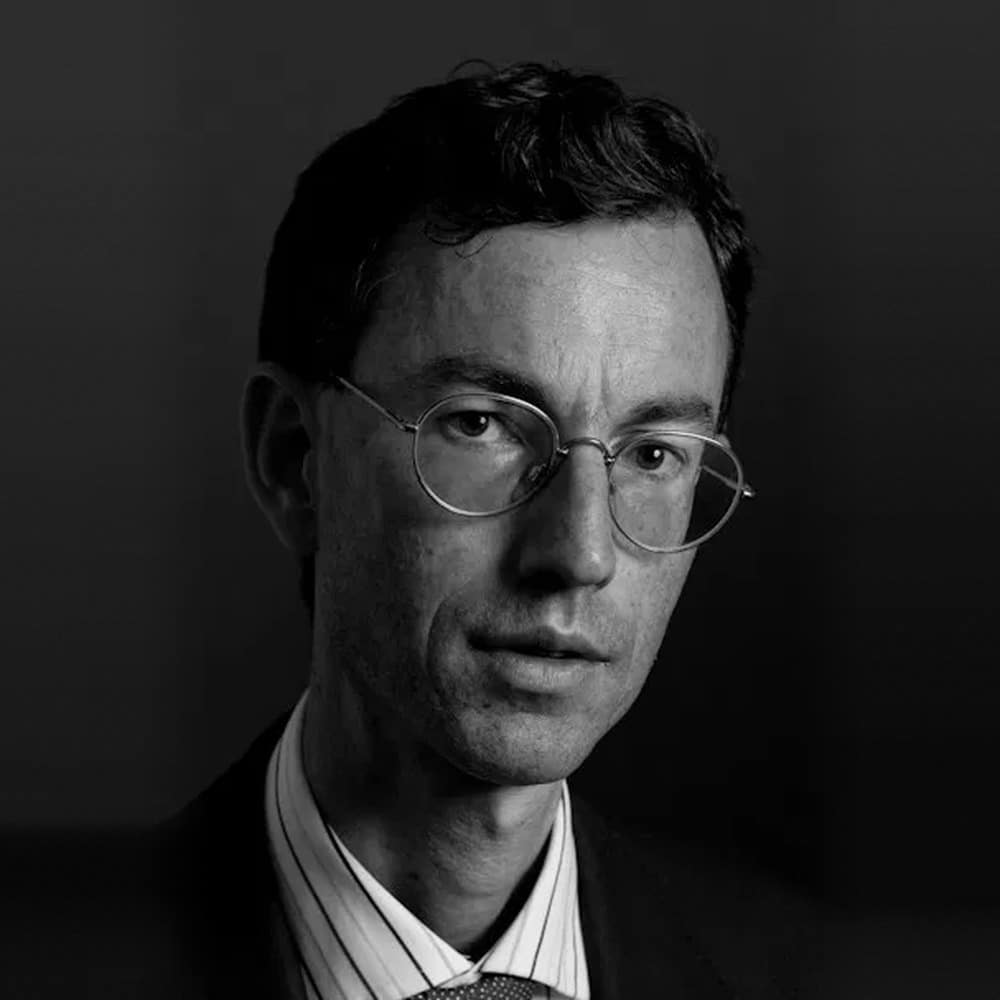
Behind the scenes, the game master of the show is Adam Wurr, an ex-British Diplomat who has been working with Centre for Geopolitics Director and historian Professor Brendan Simms; together, they have built immersive, strategic crisis simulations that equip board and C-suite leaders to make better decisions when geopolitical shocks hit.
Following the successful launch of The Wargame, we spoke with them to learn more about their role in the show, the methodology that made it possible, and how they transitioned from research to a commercial product.
Adam Wurr: “On the credits, I shall be listed as the games master. But in less excitable terms, I would be called a script consultant. However, this wasn’t a scripted documentary or drama. It shares a fundamental methodology that Brendan [Simms] and I have developed over 11 years.”
For the Wargame, we had several political figures in the room with us, with Michael Gove playing Prime Minister, Nicola Sturgeon Deputy Prime Minister and Harriet Harman as Home Secretary, with a pretend but highly realistic crisis. What the team and I were doing is helping generate the materials which allowed that suspension of disbelief, allowing the cast to immerse fully in the situation.”
It must have been an incredible experience!
Adam Wurr: “It was. One of the line producers, for example, has also worked for The Traitors. The filming was all done under reality TV principles, lots of whispered sides in corridors, the tension… It was a beautiful setting too, as we were in one of the old guild halls in central London. It was quite the experience, really. I’d never spent more than two minutes on a TV set and I wasn’t quite prepared for the intensity of it.”
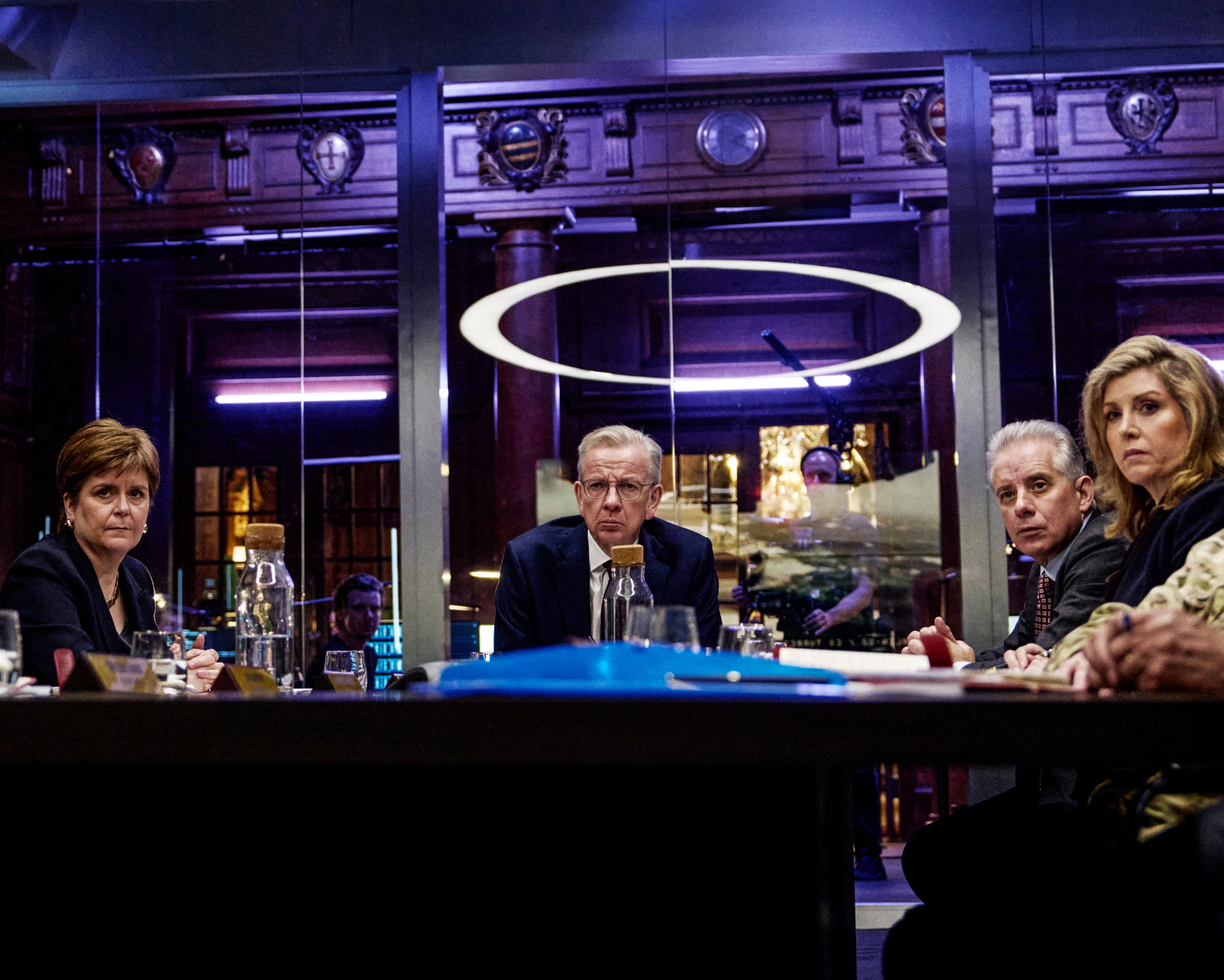
Still of The Wargame by Sky TV
So, Adam, Brendan, this methodology you set out on stage, it comes from years of collaborative work. From you Brendan, as a historian and expert in Geopolitics, and Adam, your experience as a British Diplomat.
Prof Brendan Simms: “Yes, absolutely. Adam was putting into action the methodology we use for the simulations we’ve developed over eleven years for the MPhil in Politics and International Studies, here in Cambridge. These simulations aren’t scripted; we create the conditions for the crisis to unravel and then provide the setting and space for a group of people to respond to that situation, as happened in the TV show.”
Adam Wurr: “The concept of suspension of disbelief comes from the creative arts and was coined by British Poet Samuel Taylor Coleridge as a way to describe the contract between an audience and a creative. This suspension of disbelief allows the audience to pretend enough that the fantasy they’re in is real, creating a bond by which the creator can then build a world which the audience can inhabit. That’s what we do in our simulations.”
It’s the methodology behind your newly formed spinout.
Prof Brendan Simms: “Yes, it is. The spinout is called KairoSim – Kairos being the Greek god of the opportune moment and Sim as in simulation.”
“What we're trying to emulate is not only the intellectual sphere in which government decisions are made, but the emotional and personal decision-making that political leaders experience when they are faced with crises.”
How did this collaboration start?
Prof Brendan Simms: “I teach a course in the history of geopolitics for the MPhil in International Relations. Adam did that in MPhil himself several moons ago and we connected intellectually. We thought of our simulations as a way of providing a practical application and understanding of the issues discussed in class within the context of a real life, present day simulation.”
Adam Wurr: “I spent 30 years as a British diplomat and that tenure came to an end last December. Across that career, I did many of the things which you expect British diplomats to do – I was posted overseas, I developed specialisms the Middle East and Africa, but also a very broad range of national security interests and experiences.”
I’d always been interested about the grand sweep of power and how that manifests itself in wider society. I spent a lot of time in the years after 9/11 dealing with crises on behalf of the British government. When I got the chance to take a career break, I turned up on Brendan’s doorstep as an MPhil student with a proposal to write a master’s about the way the British government behaved in the face of certain sorts of crises.”
And that master’s thesis then influenced the simulation model?
Adam Wurr: “Yes, it did, directly. What I was studying and writing about under Brendan’s supervision was how the British government had responded to the period after 9/11 when British and other European nationals were being kidnapped by terrorist groups overseas. I was looking to provide a narrative about how the government behaved when faced with these pressures.”
This provided the bedrock for the simulations – what we’re trying to emulate is not only the intellectual sphere in which government decisions are made, but the emotional and personal decision-making that political leaders experience when they are faced with crises.”
Prof Brendan Simms: “The methodology groups all our learnings, informed by a deep historical understanding. It’s an effective way to get a lot of complex information into people’s heads in a very short time. Both Adam and I respond to it personally as the people behind it, because for us, History isn’t a dry subject. History forms a central part of the underlying narratives on which today’s political behaviours are founded.”
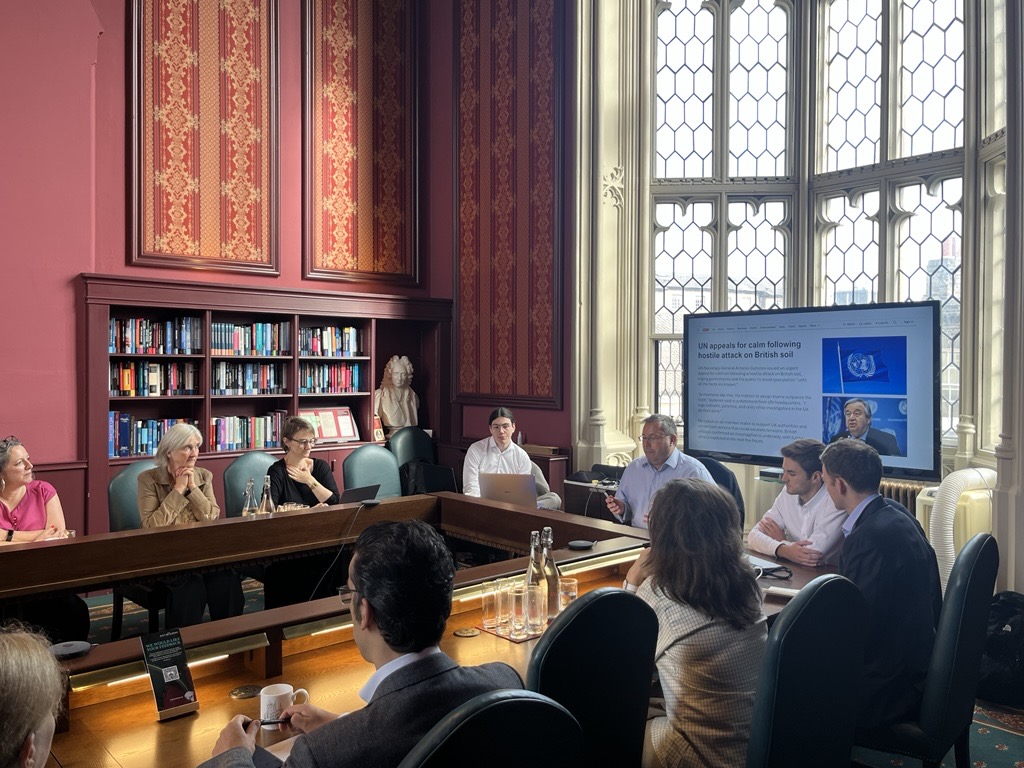
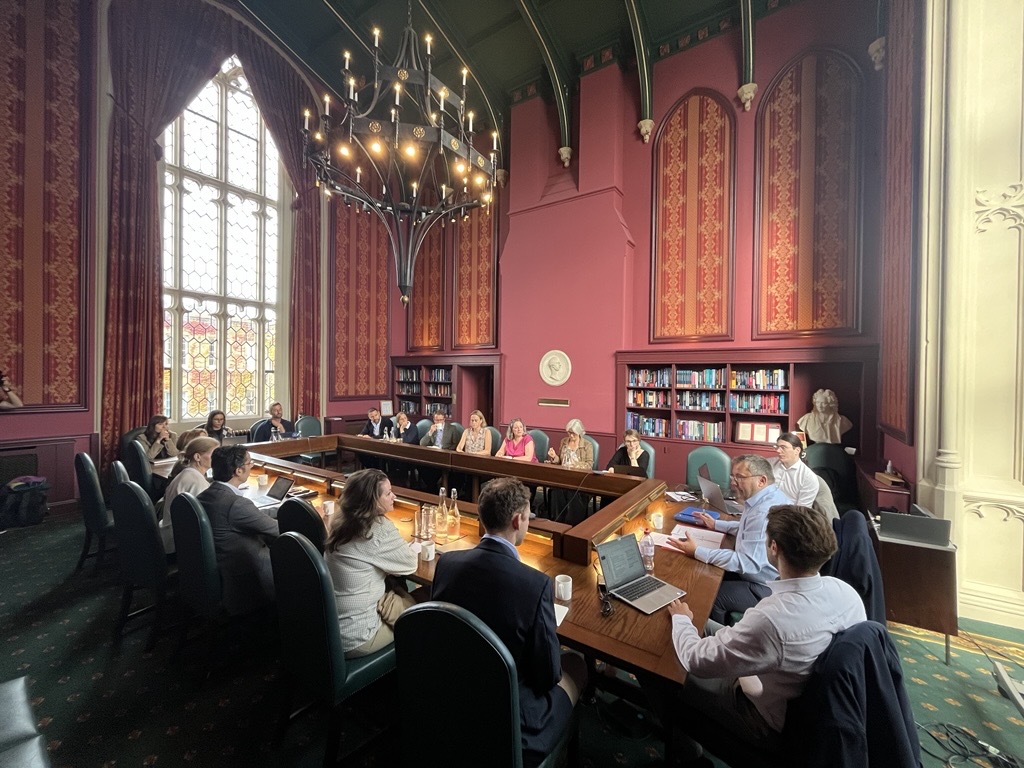
Picture of the simulation happening at the Pitt Building in Cambridge, with Adam Wurr conducting the session. Credit: Cambridge Enterprise
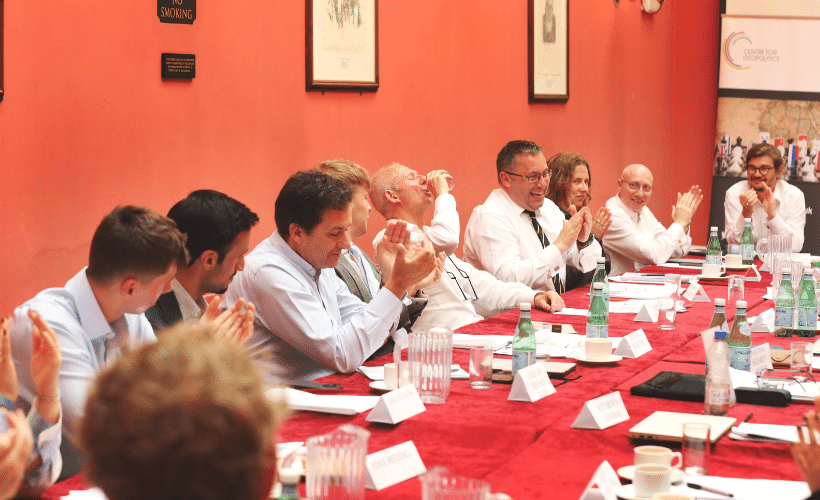
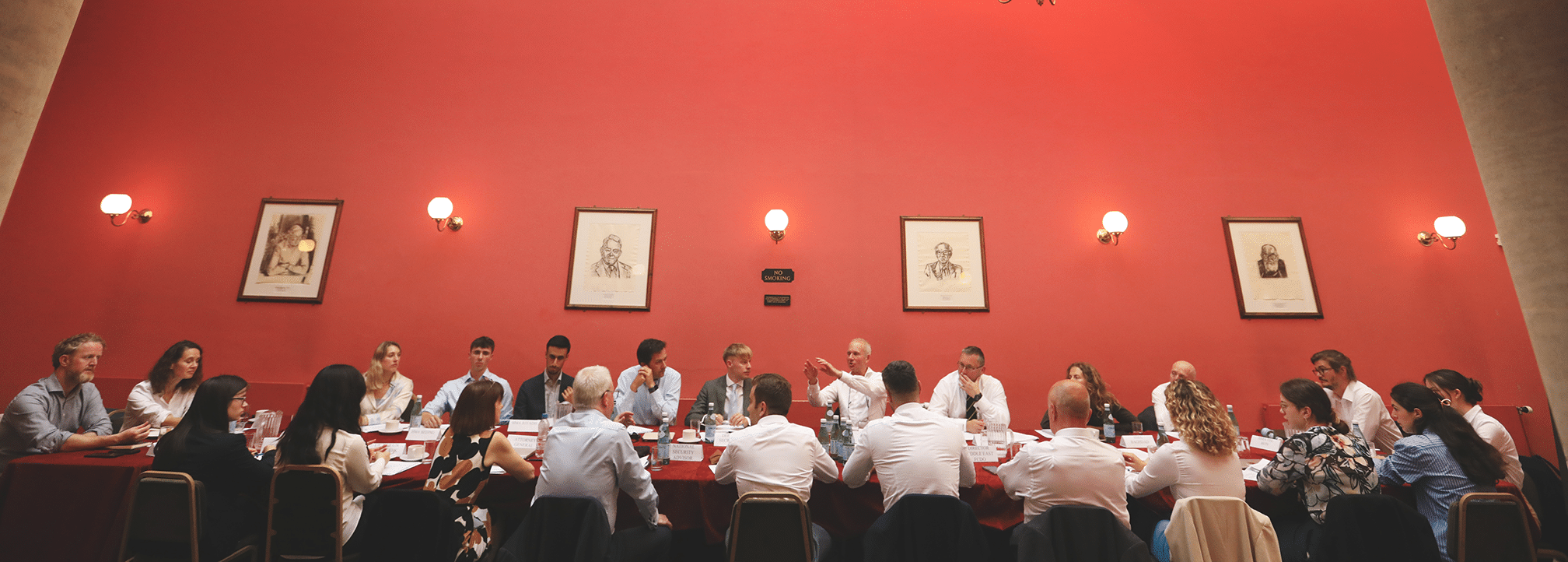
Picture of the simulation happening at the Centre for Geopolitics. Credit: Centre for Geopolitics, University of Cambridge
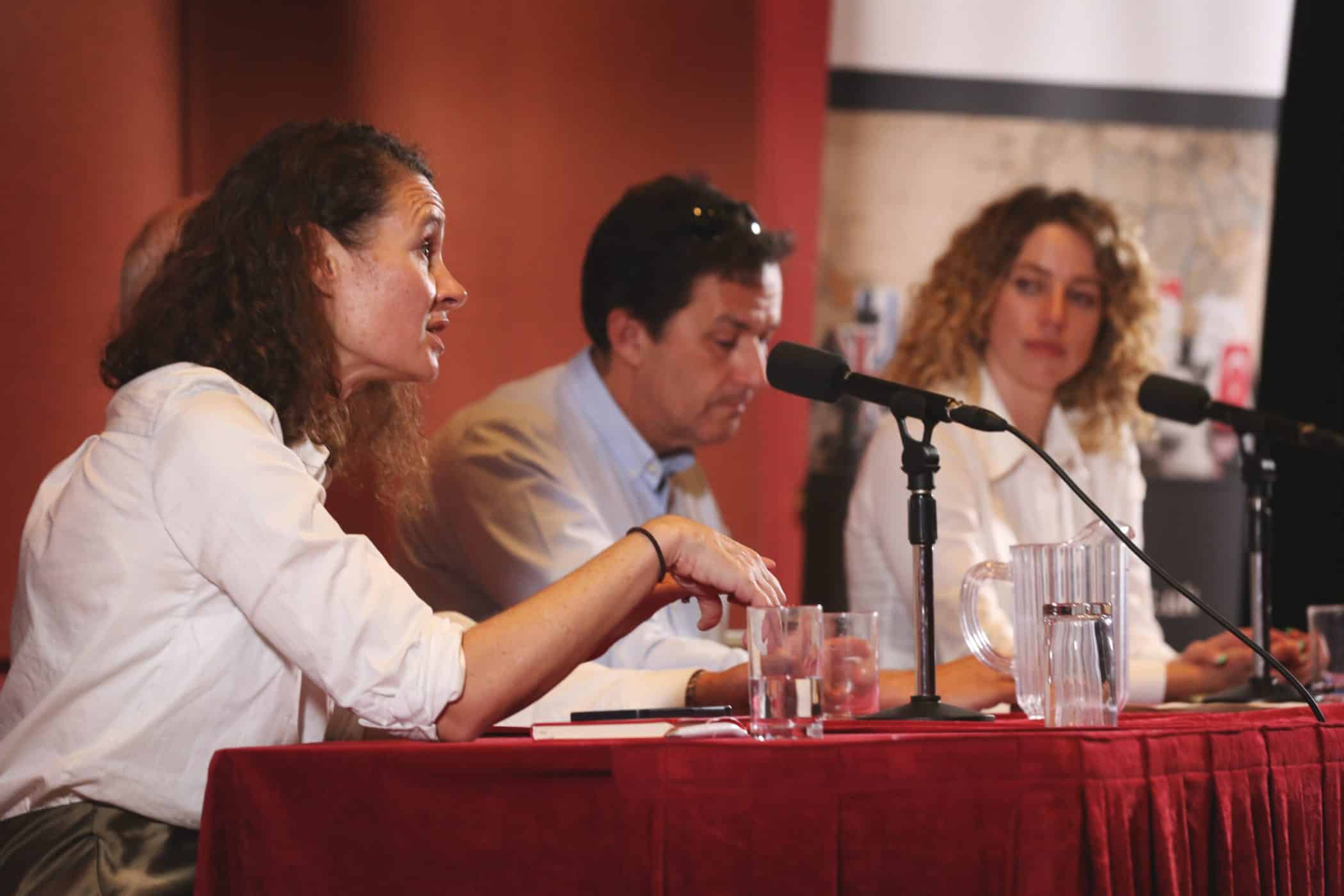
A close up picture of three speakers during a simulation at the Centre for Geopolitics. Credit: Centre for Geopolitics, University of Cambridge

What happens during the simulation? What does the experience give participants?
Prof Brendan Simms: “It’s an approximation to the reality faced in high pressure settings, such as governments. In History, we have the gift of hindsight. But at the time of historical crises, the main protagonists did not have all the information to act, but had to act, nonetheless. We emulate that tension – the lack of information, the speed of decision making that is required, the conflicting pressures.”
Adam Wurr: “The participants suddenly find themselves becoming the Chancellor of the Exchequer for the UK, or an ambassador to a foreign country and we create enough of false environment around them that they start to think and behave as if they were really in that role. Particularly if you’ve got real, well-known political figures involved in the room, as we generally do in our simulations.”
Who is this methodology for?
Adam Wurr: “It’s really for any organisation or individual that is faced with the consequences of geopolitical crisis or instability. We’re working with the Geneva Centre for Security Policy, which is a security think tank in Switzerland, with defence tech companies, with international legal associations.”
The British Red Cross who financially support our Centre for Geopolitics programme commissioned a simulation for their recent international conference on preparedness and resilience. Civic Future, a future leaders project are now a repeat customer.”
NATO, The FCDO, The Cabinet Office, all three armed services and plenty of other parts of government have also been involved. Who I think is going to need it most in the future are infrastructure, communications and export trading companies. Those who deal with the connective tissue in the globalised world, which is becoming increasingly disrupted.”
“In History, we have the gift of hindsight. But at the time of historical crises, the main protagonists did not have all the information to act, but had to act, nonetheless. We emulate that tension - the lack of information, the speed of decision making that is required, the conflicting pressures.”
You have now built this into a spinout, how did KairoSim come to be?
Adam Wurr: “We had invited the British Red Cross to come and participate in our simulations (they have a central role in UK crisis response). They liked it, and at the same time, word had reached the Social Sciences Impact Fund team at the University of Cambridge, who in turn mentioned our work to Cambridge Enterprise.
“We were supported initially by the Social Science Impact Fund, with match funding from the British Red Cross, then the Technology, Development and Licensing team at Cambridge Enterprise got in touch in January 2025. They saw the idea’s potential and have supported us with a Technology Investment Fund (TIF) award and Proof of Concept funding to build our brand materials, website and, critically, our simulation toolkit to enable delivery of our simulations at commercial scale.
“Additionally, they helped us with initial market research and validation through the SHAPE Ideas Incubator and i-Teams programme, and we have been connected with a network of mentors and Entrepreneurs in Residence that have given us some really good advice. We have also had close support navigating initial client engagements with contracting support via the Consultancy team, prior to setting up our spinout.”
Prof Brendan Simms: “Having no experience in the commercial world at all, I really found the interaction as an educational experience – their questions and their expertise, how they incorporate the translational element to our academic work. One of their questions was – well what do you need the money for? We were already signing contracts with clients, so it was a very valid question.”
Adam Wurr: “Of course, we needed funding to scale up our methodology, to make it sustainable, to train others to deliver the simulations so they can reach wider. But it did make us think deeply about our business model.
We feel very supported by the Cambridge Enterprise team, and we know that we’ll continue working together as we keep scaling and growing in the future.”