From scientific breakthrough to scalable technology
Cambridge EnterpriseIn the latest of the University’s Enterprising Minds series, Dr Simon Thomas, co-founder and CEO of Paragraf, reflects on developing a scalable process for manufacturing graphene and building a global company around its applications.
The Enterprising Minds series, developed by Sarah Fell with the help of Bruno Cotta, Visiting Fellow & Honorary Ambassador at the Cambridge Judge Business School, explores the different journeys of people trying to change the world and what it takes to bring ideas to life.
WHO?
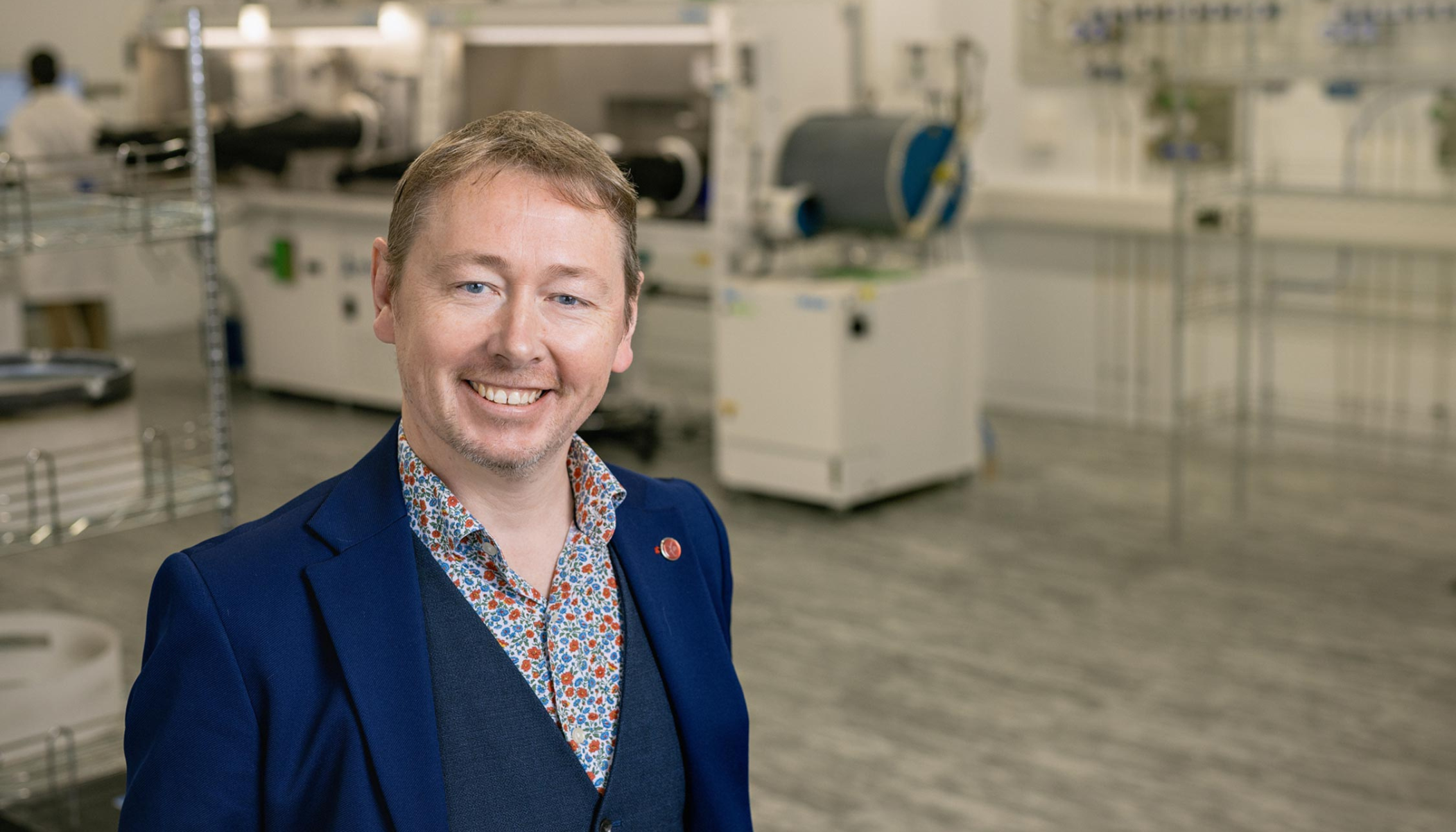
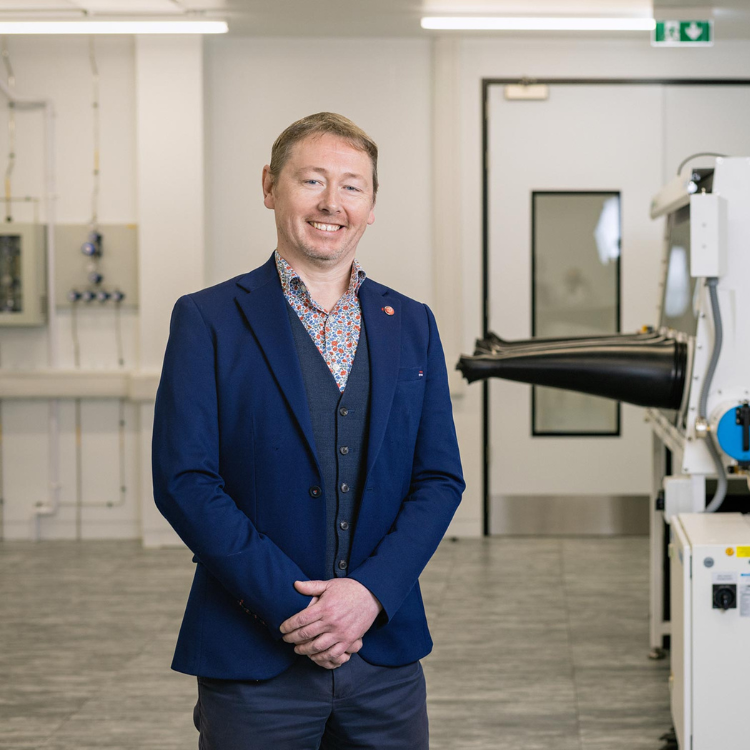
Dr Simon Thomas, co-founder and CEO of pioneering graphene spinout, Paragraf.
WHAT?
Manufacturing high quality graphene for use in electronic devices to make breakthroughs in everything from quantum computing to healthcare.
WHY?
“I’ve always believed in graphene and what we can do with it.”
Do you come from an entrepreneurial family or was there a teacher or mentor in your early life who inspired you to take this path?
Not at all. In fact, I was the first person in my family to go to university. And it never crossed my mind that I’d end up founding a company.
Were you interested in science at school?
Funnily enough, my main passion was art. I always thought I’d go to university to study fine art.
What changed your mind?
I had a wonderful art teacher who said to me: “You have a talent for art and if you want to pursue it later in life, that’s great. But it’s really tough to make a career out of it. Go and do something else first and then come back to it.”
Fortunately, I was also pretty good at science and did maths and physics (as well as art) for A-level. I took my art teacher’s advice and applied to the University of Liverpool to study aerospace engineering.
You then went on to do a PhD? Did you think you were on an academic pathway at that point?
To be honest, I did a PhD because at that stage I wasn’t ready for work.
As part of my master’s degree, I undertook a six-month project looking at alloys used in aerospace. I was using analytical techniques I hadn’t come across before and I discovered that I really liked working in a lab, ‘doing science’.
After the master’s, all my friends went off to work for British Aerospace (now BAE Systems) or Rolls-Royce. I could have gone down the same path, but I hadn’t fully scratched that scientific itch. And it just so happened that my supervisor had a PhD slot which I slipped into.
That was when I first entered the world of semiconductors, specifically gallium nitride.
Having got your PhD, you didn’t stay in academia?
By that stage, I had fully scratched that scientific itch and wanted to get stuck into practical application.
Again, it was all very serendipitous. At the time, there was a lot of interest in gallium nitride and a company called Aixtron was looking for engineers who understood it. They asked me to go and work for them: seven days after my PhD viva I found myself in a lab in Taiwan.
I spent the next 12 years working in some of the most interesting facilities in the world. It was very enjoyable but also very, very hard work.
What lessons did you learn from that experience that you brought with you to Paragraf?
There are two main ones. When I travelled, I was always on my own, often in places where I didn’t speak the language and they didn’t speak English. It was a question of ‘go and get the job done as quickly as possible’. Having to problem-solve through a language barrier takes mental strength.
I also had to learn how to work with other people in difficult circumstances. You quickly realise you don’t know everything and you have to trust other people’s expertise – and know when you have reached the limits of yours.
“You quickly realise you don't know everything and you have to trust other people's expertise - and know when you have reached the limits of yours.”
These lessons were hard won at times. I definitely had some challenging experiences.
What prompted you to re-enter the academic world as a research associate at Cambridge?
I left Aixtron after 12 years of travelling the world. I was tired. My intention was to take a year off. Three weeks into my break, Professor Sir Colin Humphreys, a leading light in the world of gallium nitride, got in touch. I had been to Colin’s lab a few times and met him at conferences, so he knew who I was.
He asked if I would be interested in working with him in Cambridge. My initial response was ‘not really’. It’s hard to explain quite how tired I was at this point.
However, he didn’t take no for an answer and invited me over to Cambridge to talk about putting gallium nitride onto diamond substrates.
This was something I’d not thought about before and, to be honest, it sounded really interesting. Colin set about trying to persuade me that doing research in his lab would be just as relaxing as having time off, but, in the end, it was his reputation that sealed it. Would I get another opportunity to work with someone as pre-eminent as Colin?
I agreed to join him and pretty much the first week I was there he asked me to take a look at another project he had up his sleeve. It turned out he was working with the Manchester University Nobel prize winners trying to combine gallium nitride with graphene.
We went up to Manchester, had a chat with the Nobel laureates and I came back on the train carrying some tiny flakes of graphene. They were doing wonderful work in the lab in Manchester but it wasn’t at a scale which could be used for devices. Colin asked if I thought I could solve this problem.
Suddenly, the job was looking a whole lot less relaxing.
“Making graphene at scale was going to be a proper scientific and engineering challenge.”
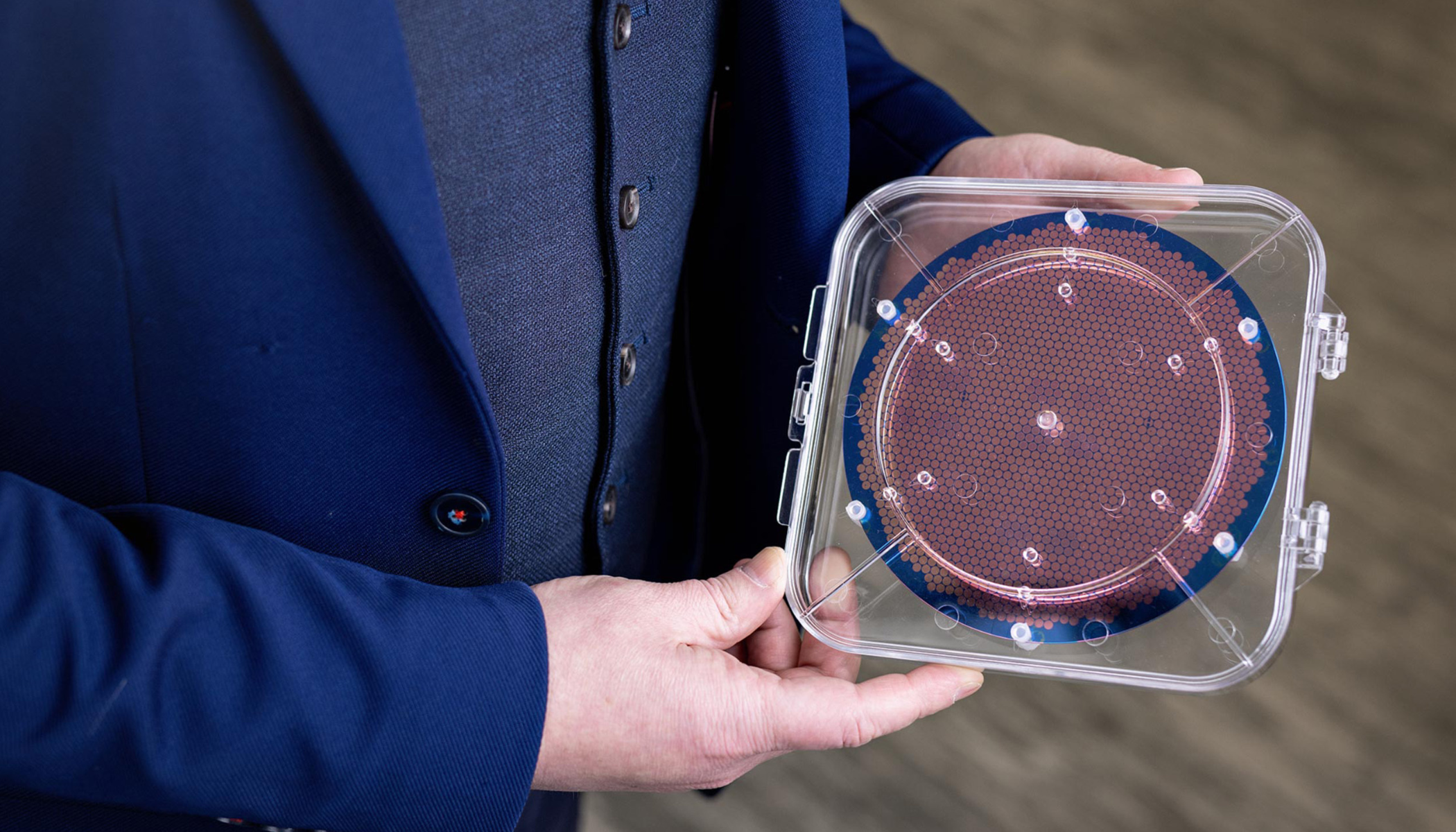
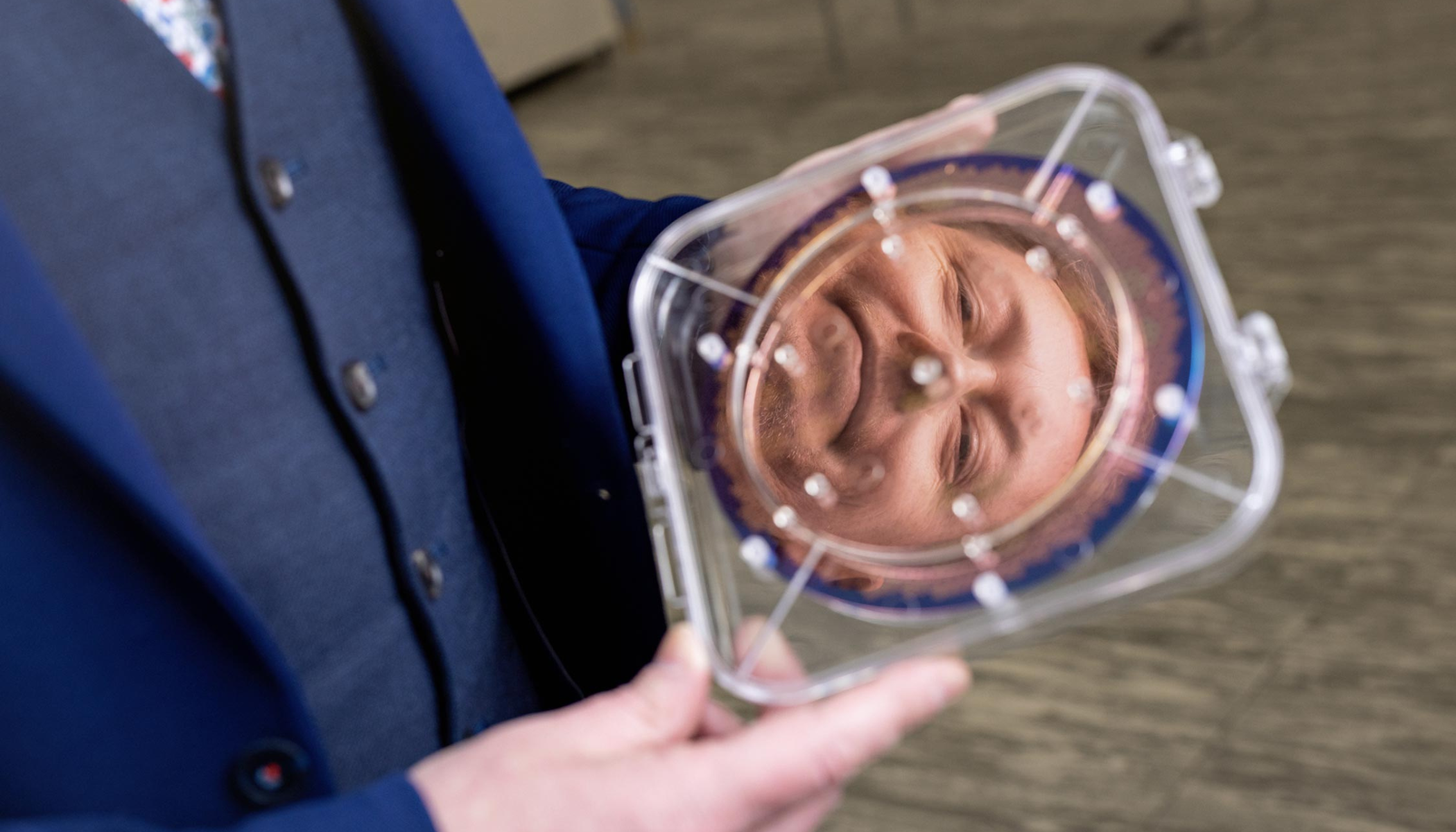
Wafer of graphene on silicon
From my previous life I knew a lot about metal-organic chemical deposition and it occurred to me it might be possible, by tweaking the process, to use it to create graphene. Five weeks later we had more or less done it.
It took another six months to get it to a high enough quality but the approach was there from the start.
So you decided to found a company?
That still wasn’t on my radar. Colin was the one who suggested we patent the technique. This was 2015. Graphene had been around since 2004 and patents were being filed and papers published at a faster rate than for any other technology.
We did think about publishing our results but there was so much noise around graphene at the time we thought our work would get lost. So we decided to go down the patent route instead.
Colin had previously created a company to commercialise gallium nitride on silicon so he had some experience of patenting a technology and could see how it might work.
Now you are ready to start a company…?
Even at this point, that wasn’t the way I was thinking. The penny finally dropped when I was chatting to Andrew Lynn, a successful Cambridge entrepreneur who said it was such a breakthrough technology we really had to spin it out.
Even though I had worked in the corporate world I had no idea how to go about it. But Andrew was incredibly supportive and the lessons I learnt about communication and resilience from my time at Aixtron proved very useful.
10 years on from submitting that patent, where are you now?
We have 115 employees on two sites in Cambridgeshire and subsidiaries in San Diego, Shanghai and United Arab Emirates.
So back to flying round the world?
These days, I look forward to it. 12 hours on a plane without a phone means I can get a lot of stuff done.
And you are producing graphene?
Absolutely. Our foundry is creating graphene for use in a wide variety of electronic devices. Its properties are amazing: it’s strong, flexible, inert and has high levels of electrical and thermal conductivity. All of which means that it can deliver very high performance in lots of different applications.
If graphene were being used ubiquitously in electronic devices today we would see a massive increase in performance and a massive decrease in the amount of energy needed to run those devices.
But we are not quite there yet: in spite of its miraculous properties, we still have an adoption challenge.
Paragraf currently has two main products, one of which is a magnetic field sensor which outperforms its silicon-based equivalent and does so using 1,000 times less energy. It is being used in sectors where high performance is required: space, medical diagnostics and quantum computing.
The other product is a molecular sensor, a chip which can, for example detect the level of potassium in your blood from a single drop, and hence determine how well your kidneys are functioning in a few seconds.
As a home diagnostic tool, it has the potential to help keep people healthy while also reducing health service costs. Further, by taking away the need to travel to healthcare providers, it reduces the impact on the environment.
What are you most proud of in your career?
Both manufacturing graphene and integrating it into devices are really difficult things to do. Essentially, we are tackling the toughest challenges in deep tech and manufacturing.
“Essentially, we are tackling the toughest challenges in deep tech and manufacturing.”
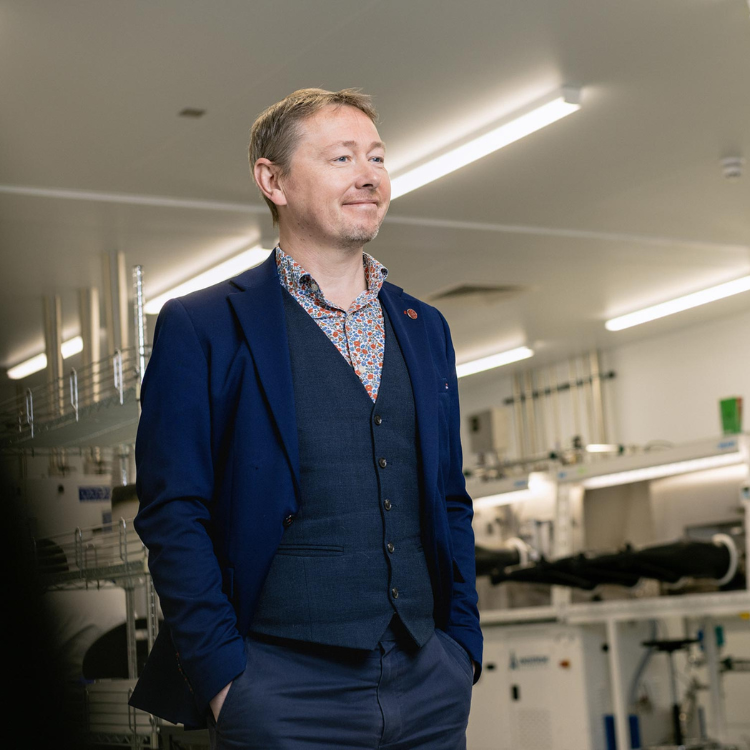
As a result, we have more than 150 patents and that’s down to the people in Paragraf. So I’m most proud of how many people have come together to attack this challenge. They have achieved more than I could ever have expected.
How do you build a culture that keeps people motivated through challenging times?
It’s about building a culture of focused innovation in which people are supported and we all understand that we need each other to make things happen.
It goes back to resilience. I’ve always believed in graphene and what we can do with it but we are working in a difficult space. When the challenges come, it’s my job to shield everyone else from them. By that I don’t mean I hide the problems.
I try to be open about the challenges but present the opportunities. And when we have failures, I make sure we learn from them. You need to have a certain level of resilience to be able to take that strain. It can be a very lonely place. I’m lucky that I have a couple of very supportive investors but the job is so all-consuming, I have very little time to spend being part of communities outside work.
Quick fire
Optimist or pessimist? Optimist.
People or ideas? People.
On time or running late? Running late.
The journey or the destination? Definitely the journey.
Team player or lone wolf? You need to be both, depending on the circumstances. I think that’s one thing I can do: I can switch between them when I need to.
Novelty or routine? Novelty.
Risk-taker or risk averse? That’s changed over my time at Paragraf. I am inherently risk averse, but I’ve learned to become a risk taker.
When I’m on a train, I often spend the time arguing with myself about whether to take a particular risk or not.
Big picture or fine detail? Again, I think you have to be able to do both. Now that I’ve been in the role for a while, the finer detail is more often getting left to other people. But there are still things I can do here that other people can’t, on the technical side.
Lots of irons in the fire or all your eggs in one basket? Lots of irons.
Do you need to be lucky or do you make your own luck? That’s an interesting question. From a business perspective, there needs to be a certain amount of timing that’s dependent on external factors. Is the world ready for your technology? Is it a good time for investors? At some point, you have to be lucky.
But then I go back to raising finance. By talking to a huge number of investors, I created my own luck in getting one of them over the line. It has to be a bit of both.
Work, work, work, or work-life balance? I don’t think the word ‘balance’ exists in my life.
This interview was originally published as part of the University of Cambridge Enterprising Minds series, authored by Sarah Fell and developed with the help of Bruno Cotta, Visiting Fellow & Honorary Ambassador at the Cambridge Judge Business School.
The text in this work is licensed under a Creative Commons Attribution 4.0 International License.
All photography: StillVision