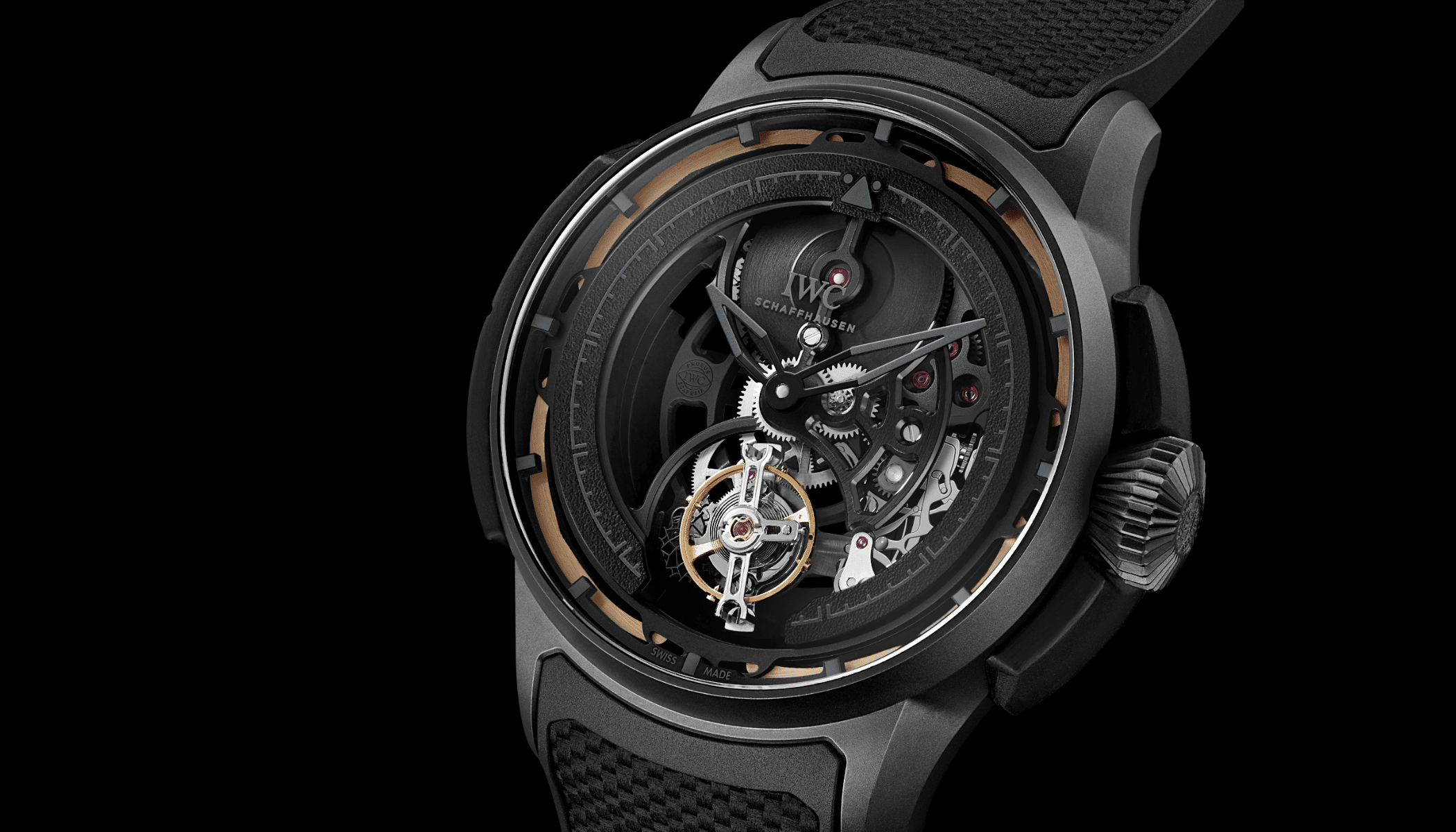
Testing the limits of mechanical watchmaking
ConsultancyA question about how to better protect a mechanical watch movement led to a consultancy collaboration between IWC Schaffhausen and the University of Cambridge that has spanned more than a decade, supported by Cambridge Enterprise.
Mechanical watchmaking demands extraordinary precision, but protecting exceptionally small and delicate components from sudden impacts presents a significant engineering challenge.
IWC Schaffhausen set out to explore how a specially engineered spring system could cushion the movement inside a mechanical watch and reduce the shock loading reaching its intricate components. After careful calculations and simulations, IWC wanted robust measurements that could demonstrate how the system responded during impacts and provide evidence to support its development.
This brought IWC together with Dr Chris Braithwaite, Associate Teaching Professor at the Cavendish Laboratory, University of Cambridge, whose expertise includes the mechanical and dynamic behaviour of materials. Beginning around 2013, the work developed into a long-running consultancy relationship, with IWC returning to Cambridge over more than a decade as new designs and technical questions emerged. The University of Cambridge supported IWC with specialist, non-contact measurements that provided the data needed to evaluate the system without influencing its behaviour. The University was not involved in the development of IWC’s patented SPRIN-g PROTECT® shock absorber system.
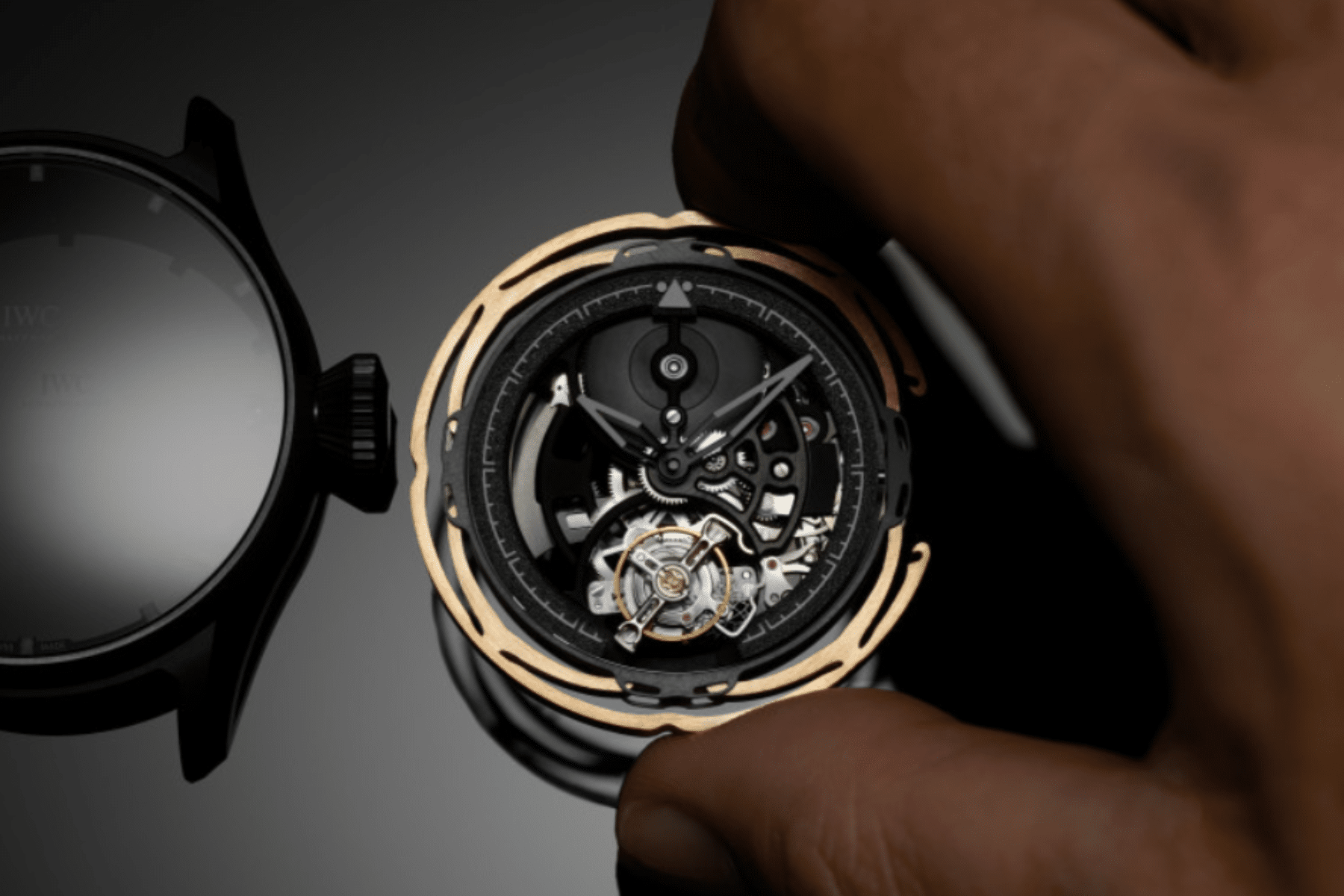
The SPRIN-g PROTECT® shock absorber system in the Big Pilot’s Watch Shock Absorber Tourbillon Skeleton XPL
Measuring a split-second impact
Inside the laboratory, the challenge became one of measurement: how could the teams understand what was happening inside a watch during an impact lasting only a fraction of a second?
To answer that question, Dr Braithwaite used a specialist interferometry technique, employing laser-based measurements to track extremely small, rapid movements without making physical contact with the watch. During controlled impact testing, two probes recorded the response of the outer case and the internal movement, allowing the teams to compare how shock travelled through the system.
The resulting measurements provided a detailed picture of how the system behaved during impact, giving IWC evidence that their system worked as expected.
“The Cavendish Laboratory helped us obtain the precise data we needed without interfering with the system being measured. This was essential because conventional accelerometers and the adhesive used to attach them can influence the system’s behaviour or introduce unwanted resonance. The non-contact measurement approach allowed us to evaluate the performance of our shock-protection system with confidence.”
Lorenz Brunner, Senior Expert Innovation at IWC Schaffhausen
“IWC wanted evidence rather than assumptions. Our role was to understand what was actually happening during an impact and generate measurements that could inform the development of the technology.”

Dr Chris Braithwaite continued,
“As time went on, the relationship grew. There was a great deal of interaction around what was possible, what could be measured and how we could generate the most meaningful data.”
A collaboration that evolved with the technology
What began as a specific technical challenge developed into a long-running relationship spanning more than a decade. As IWC continued to advance its shock-protection system, the company returned to the University of Cambridge for specialist expertise and independent testing support.
Over the course of the collaboration, Dr Chris Braithwaite and his colleagues continued sharing their expertise in mechanical and dynamic testing, helping IWC evaluate successive designs and generate the evidence needed to support the technology’s evolution.
Today, the technology advanced through this long-running collaboration is reflected in IWC’s patented SPRIN-g PROTECT® shock absorber system, which uses a cantilever spring to cushion and suspend the movement inside the watch case. The system now features in IWC’s XPL engineering programme, including the Big Pilot’s Watch Shock Absorber Tourbillon Skeleton XPL, with IWC stating that protected tourbillon movements have survived shocks in excess of 10,000 g during testing.
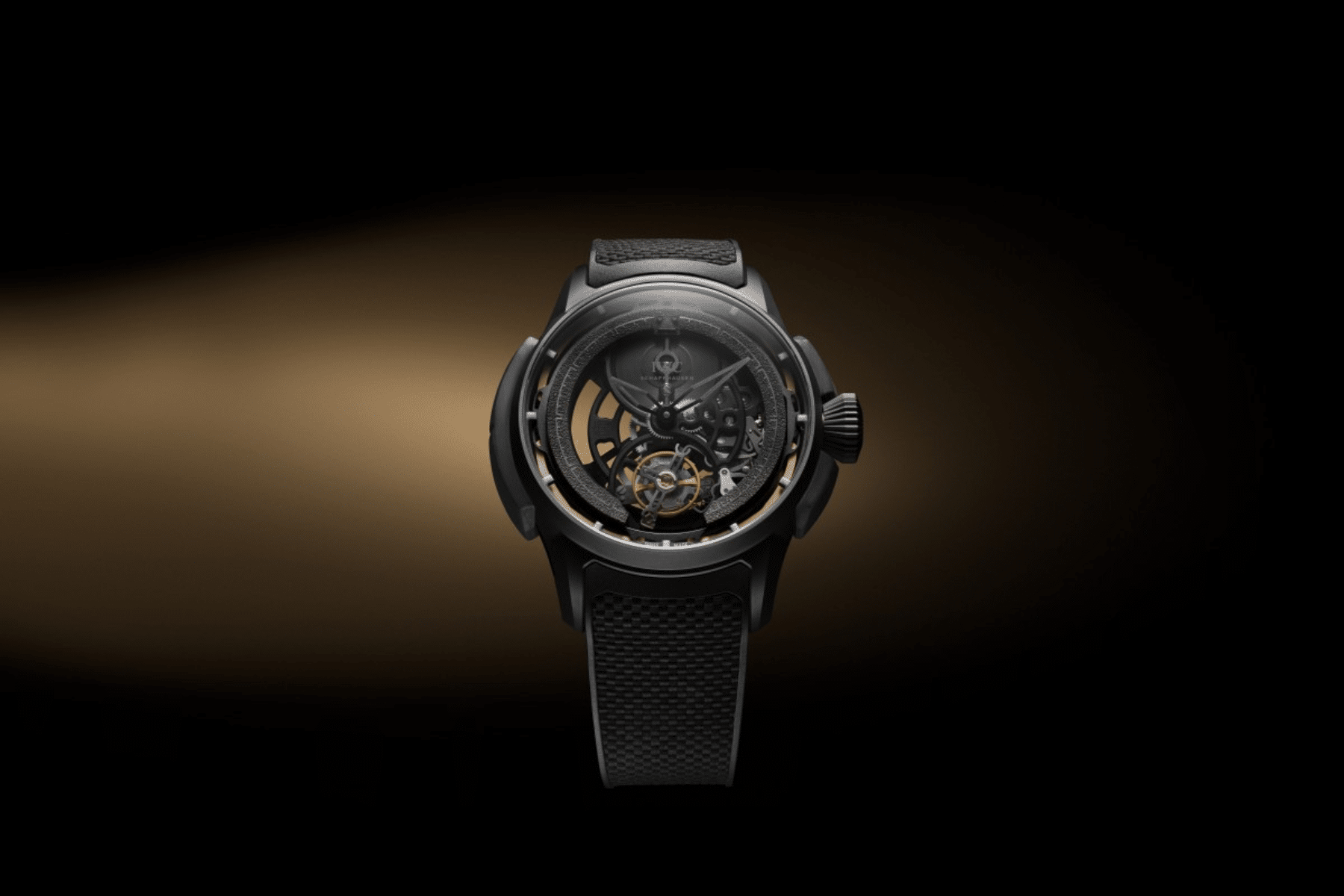
IWC's Big Pilot’s Watch Shock Absorber Tourbillon Skeleton XPL
Connecting expertise through consultancy
Supported by Cambridge Enterprise, the consultancy relationship enabled IWC Schaffhausen to access specialist expertise from the University of Cambridge over more than a decade of technology development.
From answering fundamental measurement questions to supporting the evaluation of successive designs, the collaboration demonstrates how consultancy can connect organisations with specialist University expertise to address complex engineering challenges.
“A long-term consultancy relationship like this relies on more than the technical work alone. The administrative support from Peri and the Cambridge Enterprise team was invaluable in helping the collaboration run smoothly over many years, allowing us to focus on the engineering challenges and testing work.”
Dr Chris Braithwaite, Associate Teaching Professor at the Cavendish Laboratory, University of Cambridge