Harnessing AI to transform heart health
Cambridge EnterpriseIn the latest of the University’s Enterprising Minds series, Professor Namshik Han, co-founder and CTO of CardiaTec, reflects on building a company around AI-driven drug discovery and his ambitions for the future of healthcare.
The Enterprising Minds series, developed by Sarah Fell with the help of Bruno Cotta, Visiting Fellow & Honorary Ambassador at the Cambridge Judge Business School, explores the different journeys of people trying to change the world and what it takes to bring ideas to life.
WHO?
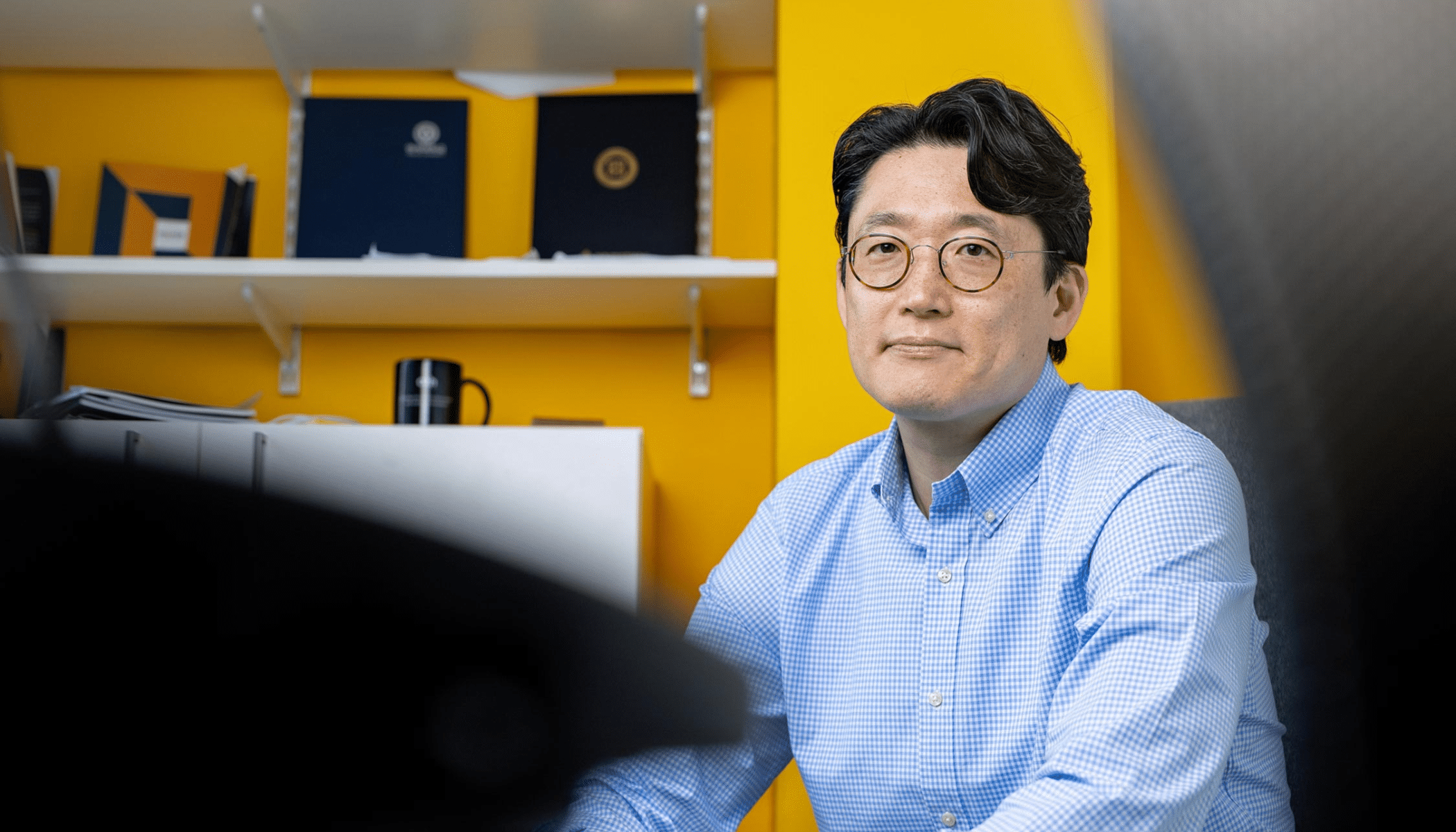
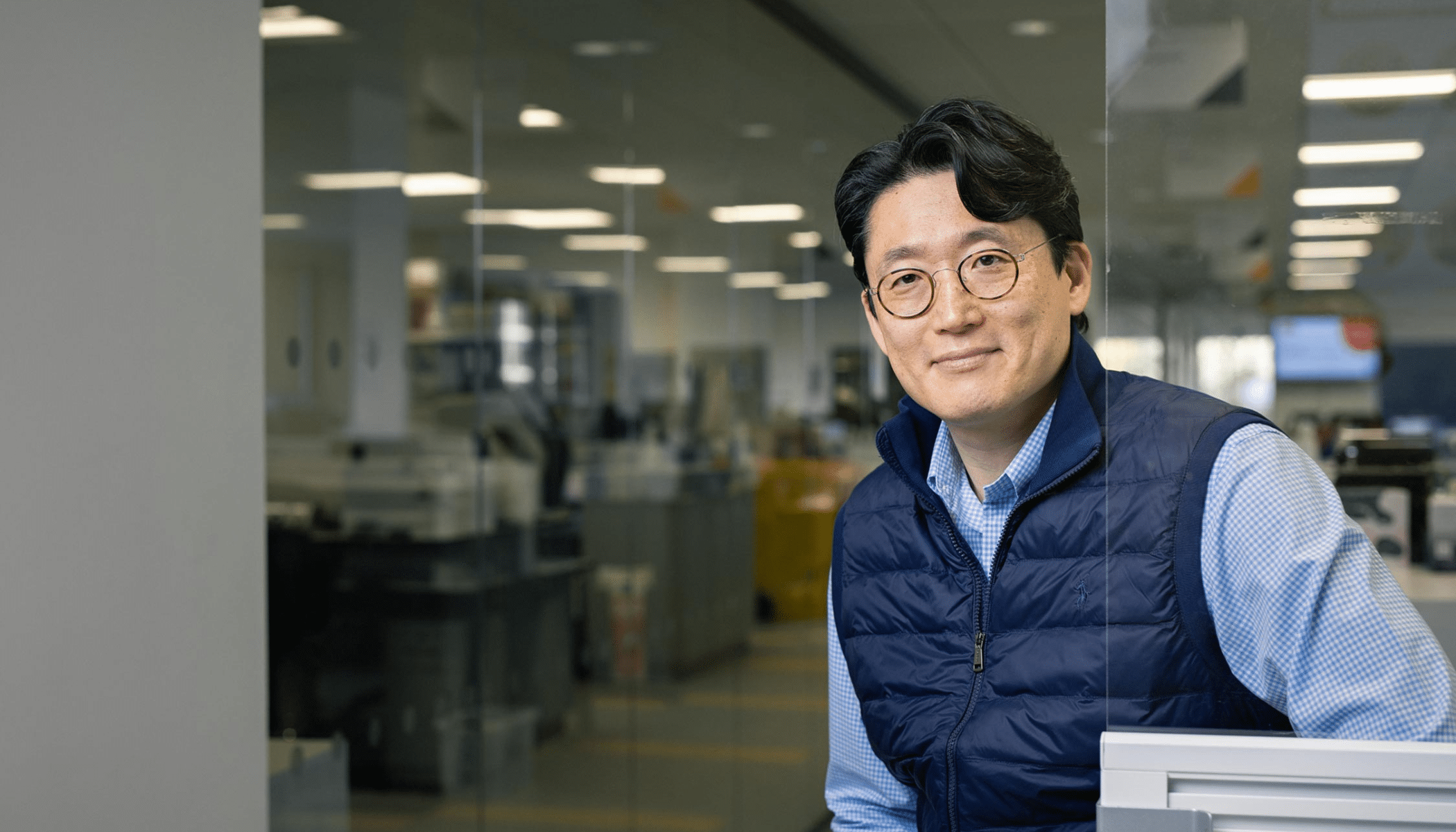
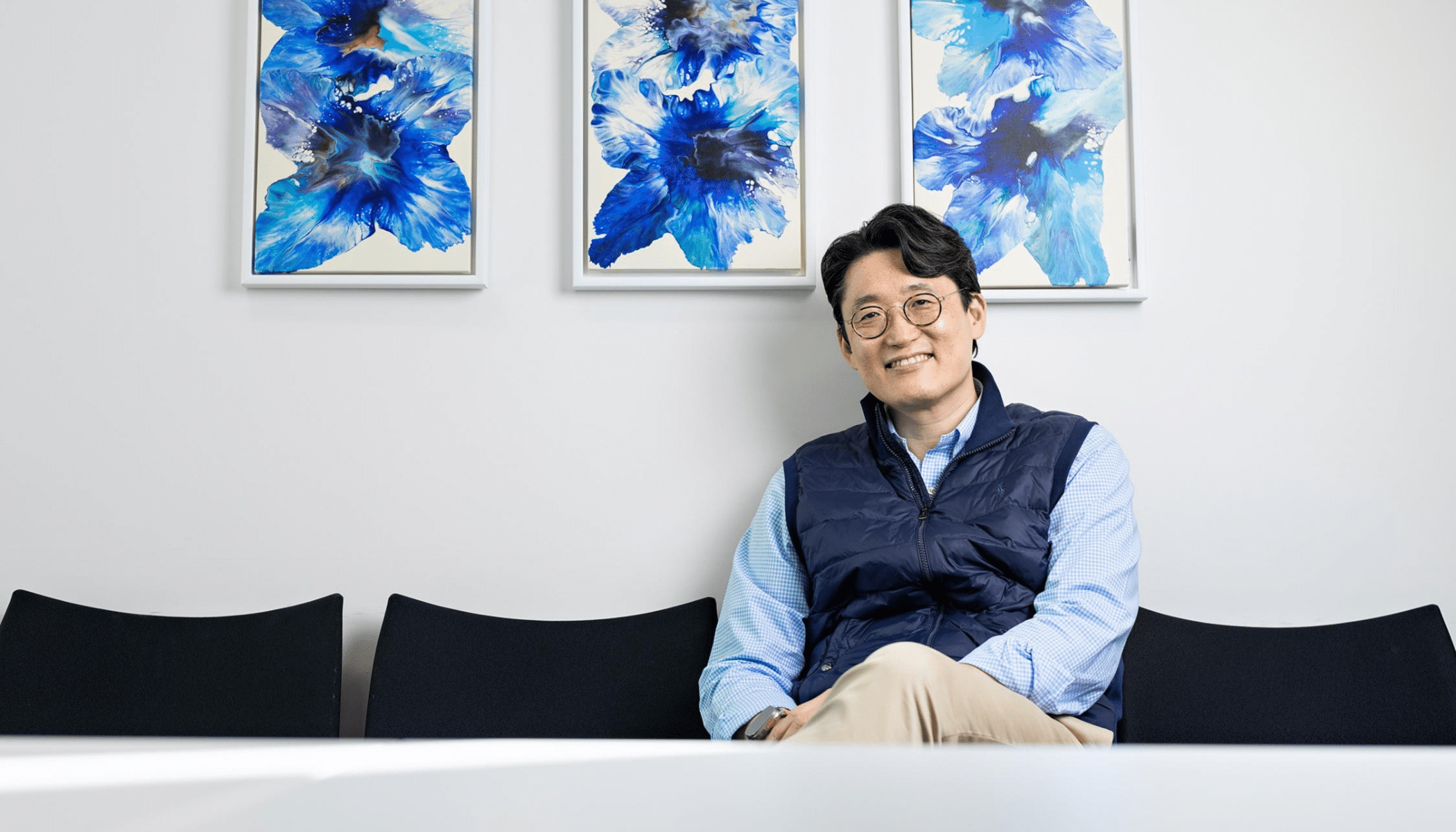
Namshik Han, Group Leader at the University of Cambridge, Professor at Yonsei University, and co-founder and CTO of Cambridge spinout CardiaTec.
WHAT?
By harnessing the power of AI and multi-omics, with quantum computing as a new frontier, CardiaTec aims to discover new treatments for all types of heart disease.
WHY?
Because cardiovascular diseases are the leading cause of death globally.
Who or what first sparked your interest in science?
That’s a good question. I actually started studying law, but as a double major alongside computer science.
At the time I was thinking of becoming an IT patent lawyer as there seemed to be lots of opportunities for that sort of role in South Korea.
However, in my fourth year I suddenly developed a fascination for the human genome project. It was around the time that Bill Clinton and Tony Blair announced that the human genome had been sequenced for the first time, heralding a potential pathway to the end of all disease. We now know it’s more complicated than that, but I was hooked – which meant a change of plan.
Instead of pursuing patent law, I now wanted to study biology. My mother has generally been supportive of my life choices over the years, but even she said maybe another bachelor’s degree is one degree too many.
She suggested I look for an advanced degree instead and I found a few groups in South Korea doing computational biology or bioinformatics. Luckily, I got into one which was using computational tools to predict protein structure.

How did you end up in Cambridge?
After that first exposure to computational biology, I decided to pursue a PhD in it. Over time, I formulated the idea that the UK would be a great place to do that.
What I actually did was go to work for Samsung Electronics, in its research centre developing standard protocols for telecommunications. After three years I realised I had no interest in telecommunications.
In 2007 I quit my job and moved to the UK with my wife and one-year old daughter to do a PhD in machine learning on biomedical data sets at the University of Manchester.
After three years of PhD research in the School of Computer Science, I moved to the School of Life Sciences at Manchester for my first postdoc, working with a new supervisor on cancer, particularly on genomics and transcriptomics.
After three years as a postdoc in Manchester, I was lucky enough to get my second postdoc position at the Gurdon Institute in Cambridge, where I found myself working alongside legendary Cambridge scientists and entrepreneurs Tony Kouzarides and Steve Jackson.
Fast forward three years and I was given the opportunity to set up my own lab at the Milner Therapeutics Institute on the Cambridge Biomedical Campus. We were looking for new opportunities for drug discovery by developing new machine learning approaches to what we now call ‘multi-omics’, the simultaneous analysis of multiple ‘omes’, the complete sets of molecules in a biological system.
We have been working on this for the last 10 years with various partners such as AstraZeneca, GSK and LifeArc, and with a lot of clinical groups across the UK and Europe.
In September 2025, I was awarded a dual appointment with Cambridge and Yonsei University in South Korea, where I have a full professorship in the Department of Quantum Information. I now split my time between the two.
Why Yonsei?
It’s one of the most prestigious universities in the country, and it specialises in engineering and medicine. But for me, the deciding factor was quantum.
Yonsei was the first university in Korea, and the second university in the world, to bring in the IBM Quantum System One, one of the world’s most advanced quantum computers.
Having that machine on campus means my lab can move beyond simulation and run our quantum AI algorithms for drug discovery on real quantum hardware, testing where quantum genuinely adds value over classical methods. We are already working with the IBM Quantum team to make our algorithms run more efficiently on today’s machines.
Why is quantum so important in your field?
I have spent 25 years applying computing to biology and medicine, and more than a decade leading my own lab in AI drug discovery. Sometimes we make a breakthrough, but sometimes we face limitations, even with AI. We decided to try adding quantum computing into the mix.
It is undoubtedly an exciting time for quantum and what we think we can do with it. Cambridge recently signed a deal with IonQ, to bring what will be the UK’s most powerful quantum computer to the University.
We are exploring how we can work together with Yonsei and with IonQ, Nvidia and IBM to harness the collective power of advances in quantum.
I am delighted that one of my projects has just been selected in the first round of funding from the new IonQ Quantum Innovation Centre in Cambridge.
My aim is to establish a new ecosystem for quantum AI research.
Where does CardiaTec fit in? What problem is it aiming to solve?
Cardiovascular diseases are the leading cause of death globally. Our ambition is to cure heart disease, including all the rarer sub-types.
To date, a poor understanding of the complex biology of cardiovascular diseases has limited clinical translation and deterred investment.
Using AI and state-of-the-art computer modelling, CardiaTec aims to understand the complex mechanisms driving disease progression so that it can develop new, effective therapeutics.
We have also received Innovate UK funding for quantum drug development, a new area that builds on our core AI and multi-omics platform.
“Using AI and state-of-the-art computer modelling, CardiaTec aims to understand the complex mechanisms driving disease progression so that it can develop new, effective therapeutics.”
Were you always planning to found a company?
No. I was just interested in the science and somehow the motivation emerged from meeting the right people.
I met Raphael Peralta and Thelma Zablocki when we were all teaching on the MPhil in Bioscience Enterprise, a programme that has been running for more than 20 years. We found that we shared the same vision and decided to set up a company. Raphael is now CEO, Thelma COO and I’m the CTO.
How is it going?
We have raised a total of $9 million across our pre-seed and seed rounds, and our platform is now industry-ready.
We got surprisingly good data at the first attempt in preclinical studies and therefore need to start fundraising earlier than planned. And we currently have partnerships with two global pharmaceutical companies.
How involved are you in the fundraising?
My co-founders tend to have the first meeting and if the discussions look promising, they invite me to the next stage, when investors start their due diligence and want to go deeper into the science and technology: how our platform works, how robust our data are, and why our approach can find targets that others miss. That is where I can make the strongest case.
You were involved in setting up Storm Therapeutics as a scientific contributor. Do you think that experience informed your thinking about setting up CardiaTec?
Yes. I contributed the computational work to the Nature paper that identified Storm’s drug target, and it has been rewarding to see that programme reach Phase 2 trials. Proximity to serial entrepreneurs in Cambridge was also inspirational.
Jonathan Milner, who co-founded Abcam with Tony Kouzarides, would come to the lab and we would go for a beer. It was fantastic listening to him. Those kinds of conversation made me realise what was possible, but I wasn’t actively looking to found a company at the time.
However, it must have planted a seed so that when I met the right people and discovered that we shared the same vision, I was ready to get involved.
You are CardiaTec’s CTO. How do you see your role?
My role is providing direction on where the new technology is heading and how to implement it.
How many people do you employ now?
We are about 10 full-time and five part-time. We have more biologists in the company than anything else because we design the experiments, generate the data and carry out experimental validation, largely through specialised contract research organisations.
As a smaller company, we don’t want to spend money on our own wet lab. We believe it’s safer and faster and more efficient to outsource.
What would you say are the biggest challenges as the company grows?
One is access to capital. It’s a real challenge but it’s not a very interesting one because all companies have the same issue.
The second is talent. It’s hard to find people who are both talented and have the right mindset. In Cambridge, Oxford or London, it’s easier to find smart people. But smartness alone is not enough.
When you are growing a company, there can be a lot of joy, but also a lot of pain. You need people who share the vision and have the same mindset.
Time – or lack of it – is another challenge, not least trying to maintain academic posts on two continents while running a company.
I remember Tony Kouzarides telling us, when I was a postdoc in his lab, that the secret of his success was good timing and a gut feeling for who he could work with. I think we got both right with CardiaTec.
My co-founders and I have very complementary skill sets plus a good balance between extroverts and introverts. I’m one of the extroverts, which helps when I’m the one explaining our technology to investors and partners.
Can you see yourself as a CEO?
Not right now. Being a CEO is a very different role: it demands energy across many areas, from finance and investors to operations and people, not just the science.
As a scientist and an academic, the CTO role is a much more natural fit for me, because I can focus on where the technology is heading while still running my lab. Perhaps one day, once I retire from academia and have more time to give, I could see myself taking on a CEO role.
Has being in Cambridge helped you commercialise your research?
100%. Cambridge is a fantastic ecosystem, with great role models and success stories. But, in practice, when you start a company, what you need most is money. You also need to have what might be premature academic ideas sanity checked as to whether they are likely to be successful in the real world.
Cambridge is also a fantastic place for that kind of advice.
When I started the company, I was surprised that so many of the successful Cambridge entrepreneurs were so supportive. Early on we were very hesitant to ask for guidance but they have been so generous with their time. Without their input, we wouldn’t be in such a good place.
What are your priorities for the next, say, 10 years?
My immediate ambition is to have a global impact and make progress towards clinical trials, both internally and through our collaborations, to make a meaningful difference for patients.
In the longer term, my aim is to develop a proven and validated quantum AI platform.
My lab has already published several papers on quantum AI methods and we are now applying the platform to a number of different disease areas as a proof of concept.
Major hardware developers, including IBM and IonQ, are targeting fully error-corrected quantum computers by around 2030.
My priority is to be ready for that moment. By ready, I mean that we have developed several quantum AI algorithm platforms for enhanced drug discovery.
In time, we will look for the best route to bring these platforms to patients, whether through partnerships, existing companies or new ventures.
What we are aiming to achieve is not just drug discovery, important though that is. The ambition is to revolutionise the whole healthcare system. Advances in quantum, AI and robotics are helping us to conceptualise a completely different kind of healthcare system.
Today, hospitals are where you go when you get sick and need some help. In the future, healthcare should be about caring for your health rather than dealing with sickness.
“My immediate ambition is to have a global impact and make progress towards clinical trials, both internally and through our collaborations, to make a meaningful difference for patients.”

What might that look like?
When you go shopping, or to the cinema or out to eat, you might need to wait for a table or for your movie to start. In those moments, you could go into a small room, nearby, to talk to an AI doctor who will perhaps check your blood pressure but also carry out rapid genomic testing while you wait.
Within minutes, you will know whether you are doing well or if intervention is required.
I would love to play a part in delivering that healthcare revolution, in whatever form it takes.
And if you have any spare time, what do you do with it?
These days, it’s spending time with my children. They are growing up so quickly. My daughter is already at university and my son is in year 10 so I’m conscious I only have a few more years before he’s off to university too. Making time to spend with them is my priority right now.
Quick Fire
Optimist or pessimist? Optimist.
People or ideas? People.
On time or running late? On time. Except right now as I’m going to be late for my next meeting.
The journey or the destination? The journey.
Team player or lone wolf? Team player.
Novelty or routine? Novelty.
Risk-taker or risk-averse? Risk-taker. I’m very clear on that.
Big picture or fine detail? Big picture.
Lots of irons in the fire or all your eggs in one basket? Lots of irons.
Do you need to be lucky or do you make your own luck? The latter. You definitely make your own luck.
Work, work, work or work-life balance? I do sometimes work evenings and weekends but I also try to spend as much time as possible with my family.
This interview was originally published as part of the University of Cambridge Enterprising Minds series, authored by Sarah Fell and developed with the help of Bruno Cotta, Visiting Fellow & Honorary Ambassador at the Cambridge Judge Business School.
The text in this work is licensed under a Creative Commons Attribution 4.0 International License.
All photography: StillVision