
Off the shelf, mechanically robust and biocompatible densified collagen tubular grafts for human tissue replacement.
Benefits
- Acellular densified collagen hydrogel grafts recellularise upon implantation.
- Creates a ‘pro-healing’ immune response to reduce risk of clotting and infections present with current standard-of-care synthetic grafts (ePTFE, polyester).
- Better graft outcomes – fewer surgical interventions required.
- Novel optimised manufacturing method for scalable production – GMP compatible.
- Graft deformation characteristics similar to native blood vessels – yielding better haemodynamic response.
Applications
- Cardiovascular – source of grafts for replacement blood vessels. Includes coronary artery, aortic aneurysm and peripheral arteries.
- Other tissue types – potential for replacement for damaged and diseased tubular vessels: small and large intestine, urethra, bronchi, bile duct and peripheral nerve repair.
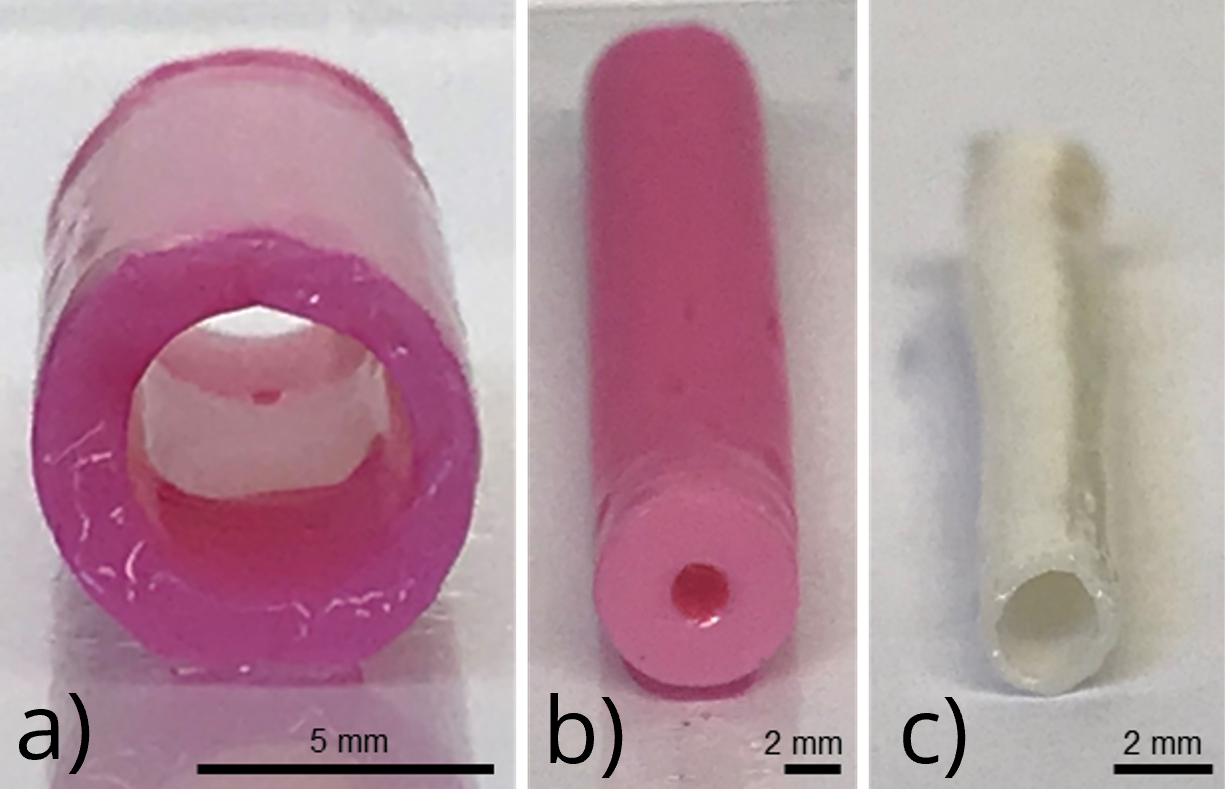
Densified collagen tube examples;
Their detailed luminal diameter and wall thickness.
- a) 5 mm and 1.5 mm,
- b) 2 mm and 2.5 mm
- c) 2 mm and 500 µm.
Opportunity
- Increasing clinical demand for replacement vessels – current synthetic grafts suffer from high rates of complication, requiring clinical intervention.
- For vascular access grafts, 31,000 people in the UK and 555,000 people in the US require life-saving heart dialysis several times a week for years.
- Patent granted in US and Europe.
- Available for licensing.
Reference: A. Justin et al., Biomaterials Advances, 2023, 145, 213245.