Jim: On opportunity, translation and Cambridge Enterprise’s role
20th anniversary storyCambridge Enterprise will turn twenty at the end of the year – specifically the 1st of December. To celebrate two decades of continued impact and innovation, we spoke with eight members of staff representing different areas of the organisation – from business development to investment management, event organisation or senior leadership.
Our aim: How Cambridge Enterprise, throughout the years, has helped them evolve and grow in their careers and also learn about their views of its impact on innovation in Cambridge and beyond.
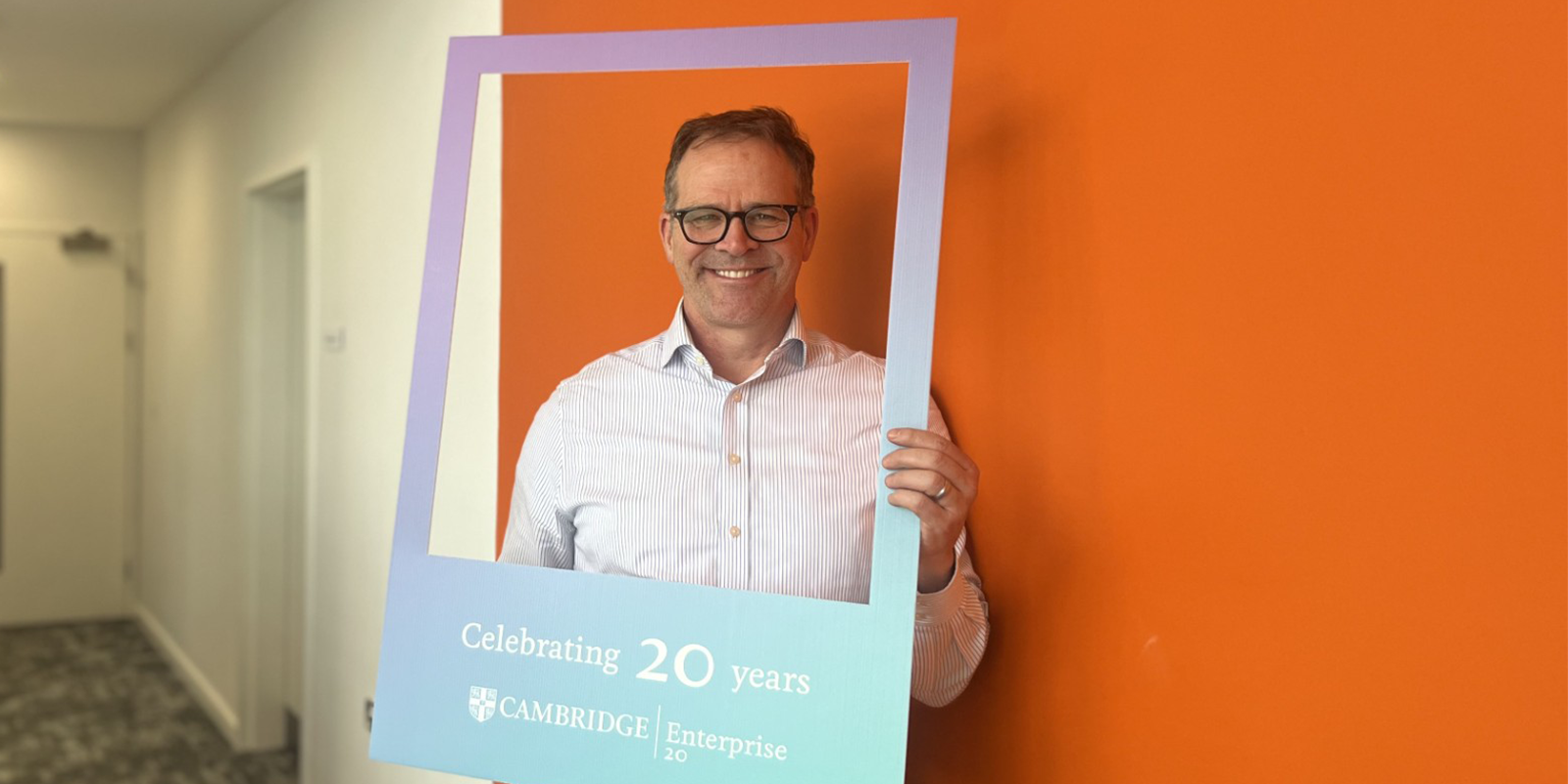
In this last piece of our people spotlight, we spoke to Cambridge Enterprise Chief Executive Jim Glasheen. Jim joined the company in November 2024 with a global perspective that aims to play to Cambridge’s strengths. With a career spanning over two decades across industry and university environments in both Silicon Valley and Massachusetts, we spoke about the uniqueness of the Cambridge ecosystem.
We asked him what drew him to Cambridge Enterprise.
“The opportunity. Upon arriving, I knew the innovation that happens at the University is top-tier worldwide. Something I’ve learned since coming here is how robust the local ecosystem is in helping foundational scientific innovations translate into startup companies.
“The go-forward opportunity is to better link up those startups with resources both nationally and globally.”
He told us a bit about his background.
“My PhD is in evolutionary biology and much of my research was in fluid dynamics… overall, not something terribly well-suited towards business. Rather, my goals and vision for the future were focused exclusively on an academic career.
“I then changed gears and decided that, actually, I was interested in exercising a different muscle. Following my Postdoc, I decided to learn a bit about business by joining a consulting firm, McKinsey & Company, for several years. After that, I was in venture capital in San Fracisco for the bulk of my career, and then co-founded a few different biotech companies in Boston with top-tier academics.”
What is the biggest challenge for scientific entrepreneurs?
“There are many, but I’d start with cultural. The cadence within a startup is very different from that within an academic lab—and they should be different. Startups need to move to a very different rhythm. Speed matters vastly, as does exquisite focus. Academic labs can and should follow the curiosity-driven and wandering path of where the science takes them.”
“We are all about connections, building bridges between ecosystems, academia, industry and bringing together minds and expertise to accelerate innovations.”
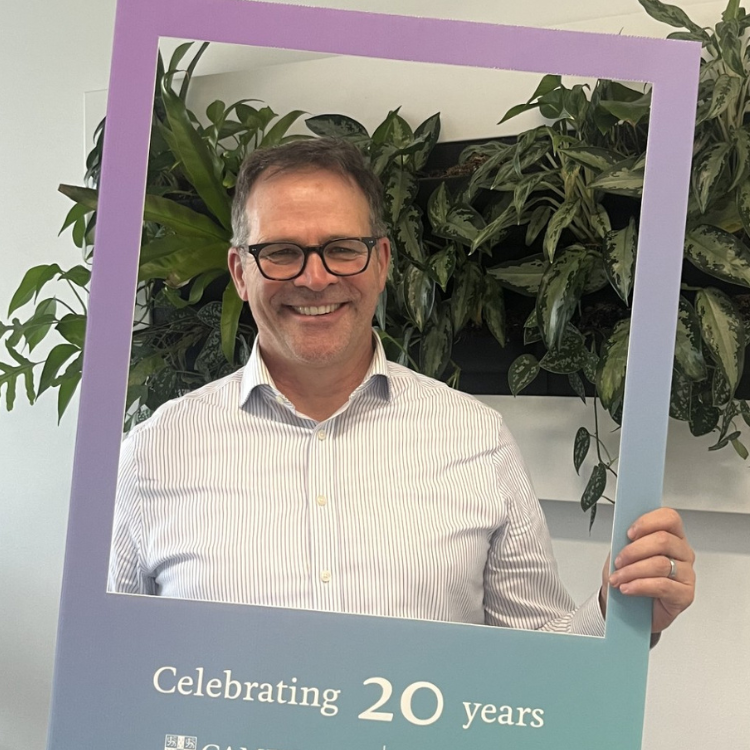
We’ve been reflecting on Cambridge Enterprise’s past 20 years, but what if we cast our eyes forward to 2046 – can you paint a picture of what it might look like?
“I’m less focused on what Cambridge Enterprise will look like and more focused on what the broader University and community will look like. Cambridge Enterprise is in service to enable that evolution.
“Some things I dearly hope will not change, such as the very special environment that Cambridge represents – supporting our academics so that they can continue to pursue curiosity-driven research and help uncover innovations that simply cannot be directed from above, but instead need to come from fundamental scientific discovery. Every once in a while, what those fundamental discoveries unearth will be best served through translation and engagement with the private sector and that is where Cambridge Enterprise comes in.
“What I could see changing by 2046 is Cambridge viewing itself as a hub that is a global model of translation and is hyper-connected and networked with different partners, not only locally here in the Cambridge ecosystem, but across the country and around the world.”
When asked to describe the culture in just a few words, he chose.
Ambitious, supportive and optimistic.
Today’s focus at Cambridge Enterprise is based on becoming the partner of choice.
“We are at a moment in history where a lot of what’s been assumed as to how innovations move from scientific insight into societal impact is shifting. Many of those steps are in flux, whether it’s due to technical innovations like quantum computing, artificial intelligence, evolving insights around human and planetary health or shifts in how partners work together driven by global geopolitical dynamics.
“In the midst of all that flux, the question is, can we be a partner of choice? It feels to me that Cambridge in particular, and the UK more generally, is well positioned to seek out to help in a variety of different ways. It’s on us to be more proactive about it and take action now.”
Reflecting on our people and our progress
Jim’s reflections highlight his vision for Cambridge Enterprise for today and the future. An ambitious organisation that is open to the world to continue connecting, innovating and supporting scientific advancements that make our societies, and our planet, a better, healthier place.
His perspectives form part of a wider set of 20th anniversary pieces that highlight different voices from across the organisation. Each one has shared personal perspectives on how Cambridge Enterprise has evolved and what drives our mission. Together, they have shown how we continue to learn, grow and our commitment to supporting innovation from the University of Cambridge.