Putting quantum computing to the test
Technology Investment FundQuantum computing promises to tackle problems beyond the reach of even the most powerful classical computers. But understanding where that advantage really lies remains one of the field’s biggest challenges.
Researchers Dr Thorsten Wahl, Postdoctoral Research Assistant from the Cavendish Laboratory Department of Physics at the University of Cambridge and Professor Sergii Strelchuk, Associate Professor from the Department of Computer Science at the University of Oxford, have developed mathematical methods to better understand the boundaries between classical and quantum computing, and how quantum resources can be used more effectively.
Now, working with Cambridge Enterprise to explore the commercial potential of their research through nascent spinout Exaqt, they hope their work can help those developing and using quantum technologies better understand what is possible and make more informed use of emerging computing systems. We spoke to Thorsten and Sergii about their research, its potential and their journey towards commercialisation.
We started by asking them a little about their research and the problem they’re trying to solve.
Dr Thorsten Wahl: “The original problem we started trying to solve was how you compare quantum computers with classical computers.
“In 2019, Google released a quantum processor that they claimed could carry out a computation that would take the world’s most powerful computer 10,000 years to complete. But classical algorithms continued to improve and, three years later, the same calculation could be done on a laptop within a couple of hours.
“That highlighted a fundamental problem. Comparing quantum and classical computers depends on the best classical algorithms available at the time, and these can change very quickly.
“We developed mathematical methods that allow us to establish how far these classical approaches could potentially be improved. That gives us a much clearer benchmark for comparison and helps us determine when a quantum computer may offer a genuine advantage.”
Professor Sergii Strelchuk: “You can zoom out and ask a bigger question: what are quantum computers actually good for? They are not going to speed up every computation, so we want to understand which problems are particularly suited to a quantum approach and whether a classical computer could ultimately solve that same problem just as effectively.
“Being able to separate the power of classical and quantum computing is, in many respects, one of the holy grails of our field.”
So, what is holding quantum computing back from reaching its full potential?
Professor Sergii Strelchuk: “The hardware, it’s one of the biggest challenges. Today’s quantum computers cannot run for very long without errors. The moment you start doing something useful, noise begins to affect the computation and those errors can appear faster than our ability to detect and correct them.
Dr Thorsten Wahl: “Another important area is hybrid quantum computing, where classical high-performance computers and quantum computers work together.
“The idea is to make the best use of both, using quantum computing where it offers the greatest benefit and classical computing elsewhere. Our work can help us understand how to use those different computing resources as efficiently as possible.”
At the heart of your research are quantum circuits and tensor networks. But what do those terms actually mean?
Dr Thorsten Wahl: “A quantum circuit is essentially a set of instructions for a quantum computer. It tells the computer which operations to carry out and in what order.
“In principle, the same calculation can be carried out on a classical computer, but it may take an extremely long time. Tensor networks, which provide a way of representing quantum computations in a form that can be analysed using classical computers, can help us understand how efficiently that can be done and what that tells us about the capabilities of quantum computers.”
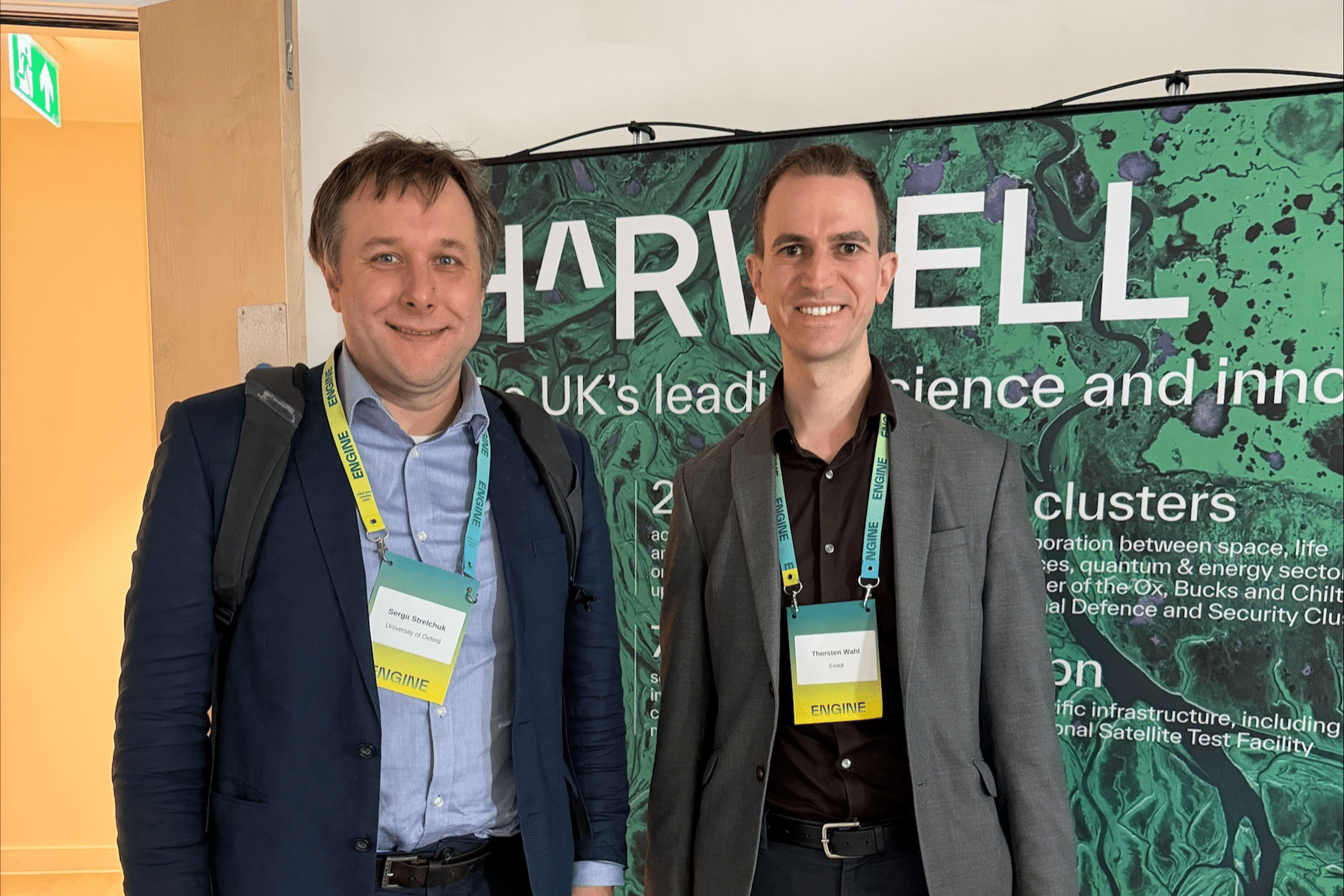
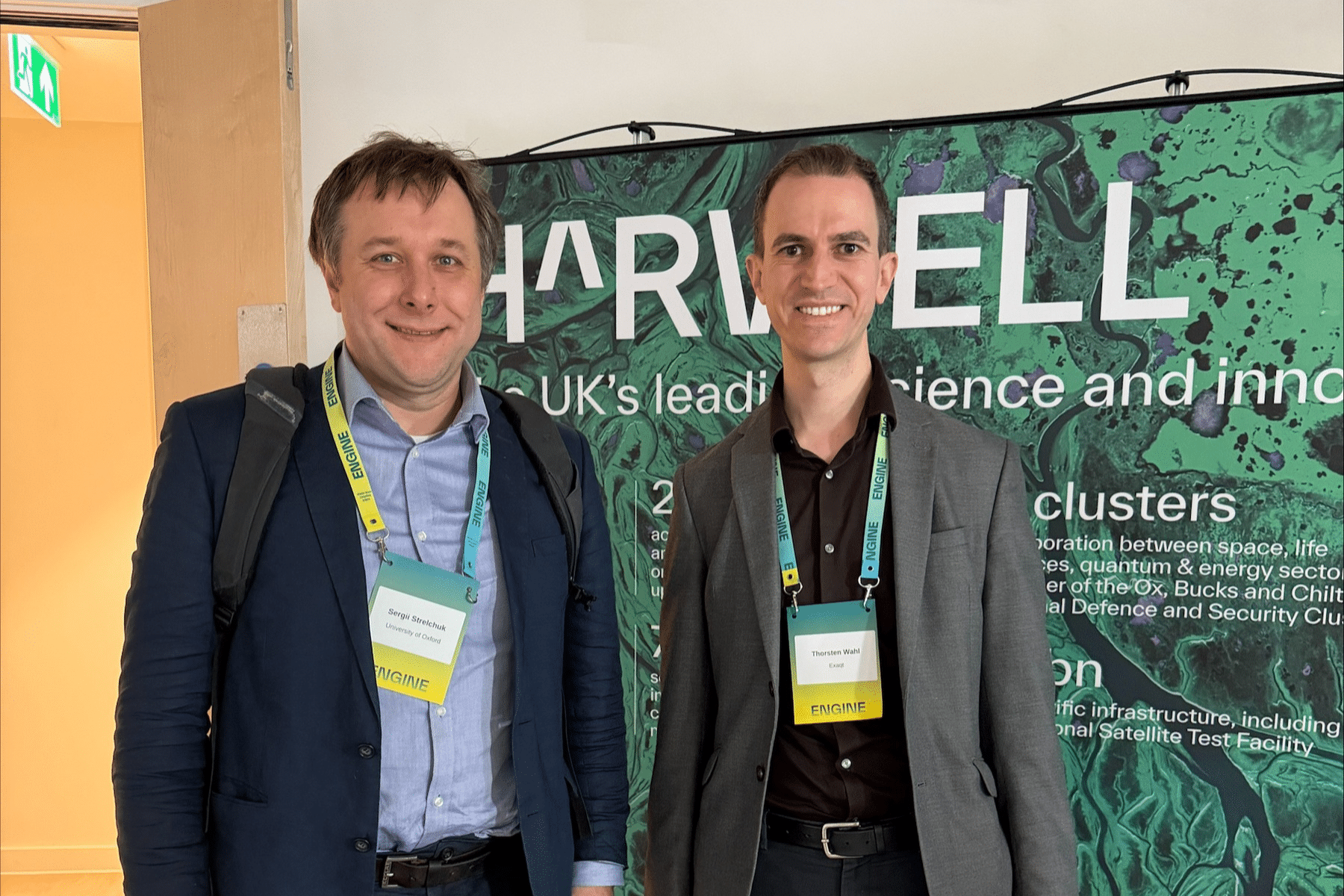
Left to right: Professor Sergii Strelchuk and Dr Thorsten Wahl
Where could you see this technology making a difference in practice?
Dr Thorsten Wahl: “One application I’m particularly excited about is quantum chemistry and molecular simulation, especially because of its potential relevance to areas such as drug discovery.
“These can involve highly complex calculations that could be particularly well suited to quantum computers. Our work could help make better use of the computing resources available when running these types of calculations, helping users avoid unnecessary computation and get more from quantum hardware.”
Professor Sergii Strelchuk: “More broadly, many real-world challenges depend on our ability to solve extremely difficult computational problems.
“Our work could help users understand when quantum computing genuinely offers an advantage for their particular application, allowing them to make informed decisions about when and how to use the technology.”
How has Cambridge Enterprise supported you on your commercialisation journey so far?
Dr Thorsten Wahl: “Cambridge Enterprise has supported us in many ways, from market research and reaching potential customers to preparing for conversations with customers and investors.
“They’ve also supported the project financially through the Technology Investment Fund, helped us connect with investors, lawyers and other experts, and filed a patent for us. The support has covered many different parts of the commercialisation journey which we wouldn’t have been able to do on our own.”
Professor Sergii Strelchuk: “I’d also highlight the support Cambridge Enterprise provides for academics looking to become entrepreneurs. Having clear conditions for founders, alongside access to wider expertise and support, can make a real difference when taking those first steps.
“For me, that reflects the strength of the Cambridge ecosystem and the confidence it gives researchers looking to explore the commercial potential of their work.”
As they’ve taken their first steps towards commercialisation, the process has brought some unexpected lessons.
Professor Sergii Strelchuk: “One thing that surprised me is realising that the problems we think we’re solving may not necessarily be the problems the world needs solving. Finding that common ground is really what entrepreneurship is about, particularly in deep tech.
“You can become completely engrossed in ideas that you believe could change the world, but entrepreneurship gives you that reality check. You have to approach it with an open mind and a resilient heart. Ultimately, being able to take your research and find genuinely useful applications for it in the real world is incredibly rewarding.”
Thorsten Wahl: “I completely agree. You need to have an open mind, be prepared to pivot and even put ideas aside when they aren’t what customers need.
“What surprised me personally was how positive those conversations have been. Coming from academia, I expected meetings with investors and companies to be much more tense, but my experience has been the opposite.”