How to ensure academic freedom in universities?
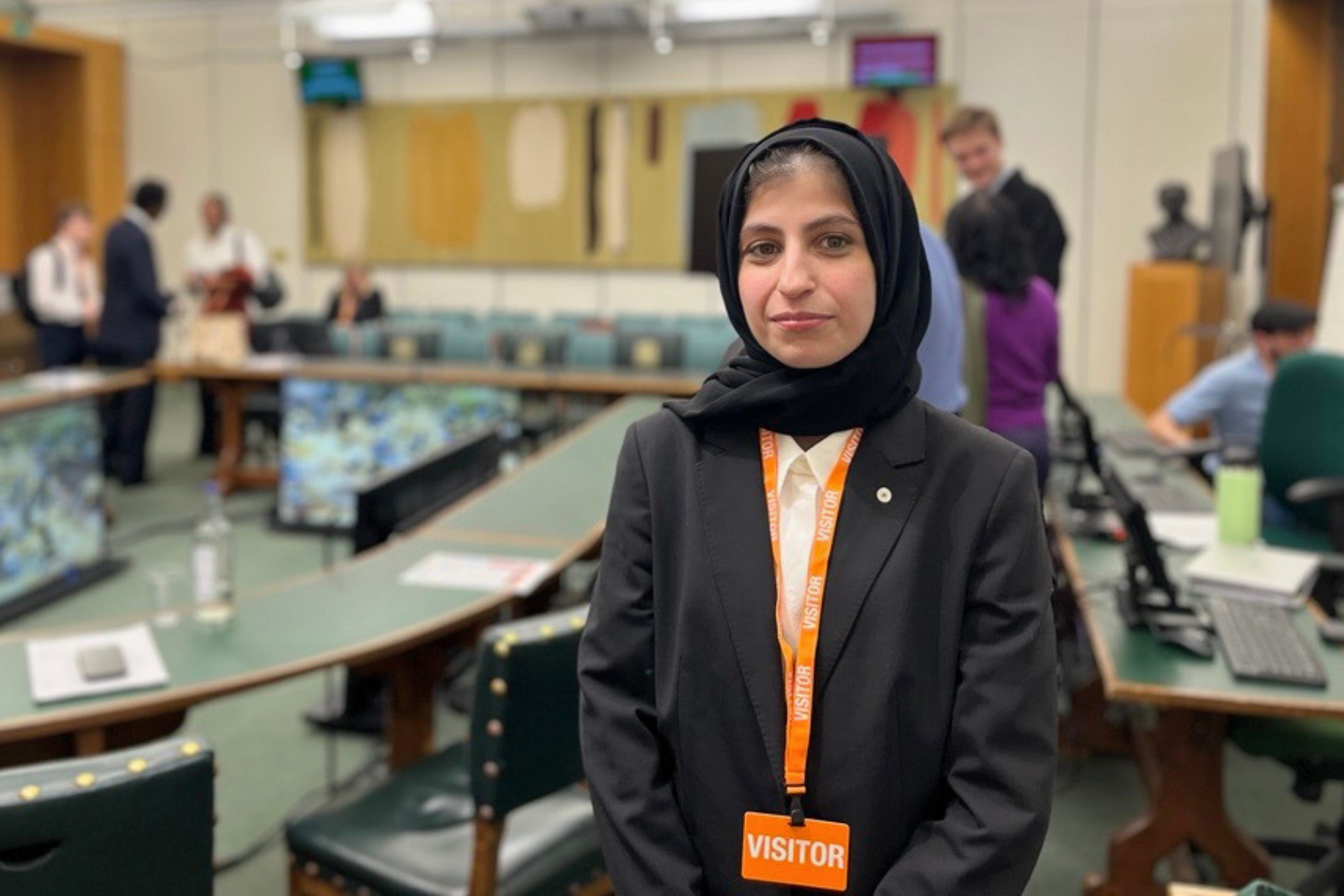
Arts, Humanities & Social SciencesWith the introduction of the new Higher Education Freedom of Speech Act in 2023, PhD student and pupil barrister Duaa Jamal Karim realised that a difficult to navigate guidance could hinder the ability of universities to effectively protect free speech.
Tackling the challenge head on, she recently launched Actsure, the UK’s first automated free-speech compliance system for universities.
Duaa translated an inaccessible policy into a platform that helps governance offices navigate the duties laid out by the Act and ensure freedom of speech can continue within the University walls. In this interview, we delve deeper into the issues Actsure intends to solve and the impact she hopes to see.
We first asked her about her background and what inspired her on this journey.
“This all began before I started my PhD, in an experience that ignited my passion for this whole subject. I was a chair of governors at my children’s local state primary school for eight years in a London borough. It was 2020 and there was statutory guidance that came into force – the Relationships and Sex Education (RSE) guidance, issued by the Department for Education, which made age-appropriate teaching on relationships, sex, and health mandatory across all schools.
What I quickly realised was that the model policy that the school was given was incredibly vague and difficult to understand, even for me with a legal background. How were we going to implement this if we couldn’t quite understand what was expected from us?
I sat down and read it, before the school formally adopted it, and realised that we could mould the guidance to suit our schools’ needs. In our centre, we had 600 pupils and the majority were from an Asian background, so we had to make the model work for us and the demographics we were working with, which we did.
I was very surprised when we then won an award for the best implemented policy in the borough out of 34 schools! Essentially, all we did was shape it to our community. But of course, this was only possible because I had the knowledge to interpret the act in a way that we could then make sense of and apply accordingly. It was an incredibly gratifying experience.
I then started my PhD at the University of Cambridge on the politics of impartiality and neutrality in British education policy. This was partly inspired after a conversation with Dr. Farah Ahmed, from the Faculty of Education, who suggested I could use the experience in the school as a case study.”
“We want to go back to the roots of why universities exist, is to ensure academic integrity, to shape the future generations. That's the university's core mission and what Actsure is here to protect.”
That’s when the Higher Education Freedom of Speech Act was then launched?
“It was. I was curious about it, so I had a look. I quickly realised that it was the same problem as the one we’d encountered in my children’s local school, with serious consequences for universities, including a fine of 2% of annual income or, more drastically, the removal of a university’s licence to educate.
I read the guidance, which is what the regulator published to help universities run the law in practice. It was a cumbersome read – a dense 67-page document which details up to 52 possible scenarios, each one more confusing than the last. I immediately thought – this is going to be such a challenge to implement in a way that is true to what the Act intends.
Essentially, the Act gives the university three duties: the duty to secure free speech, the duty to protect free speech and the duty to promote free speech.
To ensure this, there are a set of steps. It also asks for these steps to be recorded and audited. But it was all simply too difficult to understand, never mind implementing. The risk? That this would hinder the ability for academics to express themselves freely. That’s when the kernel of Actsure started to form in my head.”
From idea to the product it is now – what happened in between?
“It was Dr Farah Ahmed, once again, who helped me make the connection. I had a brief conversation with Cambridge Enterprise. I was very honest. I have this idea and I want to develop this platform but I don’t know how to do it. I am not a computer person, and this needed programming knowledge.”
You didn’t have the coding knowledge, but you had the legal knowledge and were deeply motivated.
“I was – I thought it was unjust that a compliance office would have to deal with such amount of responsibility brought on by the Act. I started moving. I put an Advisory Board together. I developed a data matrix, which is basically a mirror of the regulatory advice, incorporating the information in the Act.
It works as a step-by-step system to help assess and record an event. The recording part is crucial. Under the law, you need to prove that what you did was correct with the knowledge you had at the time. Our platform allows you to do this in an easy, unified way. It’s a documented way of showing you followed the guidance. If the extreme happened and you were brought in front of a courtroom, you could show proof that you followed the right procedure, you have a data trail. So, Actsure was not designed to replace legal judgment. On the contrary, it handholds decision makers to ask the right questions, record the right evidence, and show how decisions were reached.
There is a complaint scheme to be implemented in September 2026, much earlier than anticipated. Universities will need to be able to move fast and a well documented system will be key. For me, Actsure is not just another compliance platform. It is a targeted response to a wider governance problem in education, where institutions are increasingly expected to apply complex and sometimes competing legal duties, without clear tools.
Actsure was born in this gap, to translate laws and duties into everyday language, to empower professionals to make confident decisions transparently, and help universities protect lawful speech.
With all of this evidence, I thought that something needed to be done, and why not me? I brought my father into this adventure. He is a lawyer, a founder, and someone whose judgment I deeply trust. Together, we tested the idea, carried out market research and we realised this was a real need.”
That’s when Cambridge Enterprise stepped in
“Yes, after our initial chat, I presented a project and it was valued positively and was granted an award from Cambridge Enterprise’s Technology Investment Fund, with which we were able to pay an external company to build the platform. As I said before – I am not a computer person!”
I then also joined the SHAPE ideas incubator programme, that is run by the Technology Development and Licensing team and it was a great experience. It allowed me to get my head around how to better position Actsure.”
How does the platform work?
“It’s on a webpage and has a single sign on access. It’s incredibly simple to use, the average is about a minute, with the details of the event, any associated paperwork you wish to record, such as a risk assessment, and log it. If the event is approved or rejected, you specify why.
In the case that someone doesn’t know how to answer a certain part, they can click a button that reads ‘answer with guidance’. This page has the three steps that you should cross against, which is based on our data matrix. Once it’s all recorded, you get a report with a dated stamp. A data trail of evidence.
At Actsure we also offer annual free speech training. If a given university realise that they have a specific issue associated with this, we can come in and train their staff to ensure academic freedom is protected at their centre. We have also licensed the Communities of Inquiry programme, developed by Professor Alison Scott-Baumann at SOAS University of London, who has been integral in this work. We got together to equip universities with the tools to facilitate difficult conversations on campus in a structured, constructive way.”
Why a need for a free speech act? Why now?
“That’s a really good question which I ask myself every day. Free speech was always enshrined under the Human Rights Act 1998 in the UK, as well as being in the European Convention.
Nothing has really changed in terms of what can be said and can’t be said. The main difference is to be able to demonstrate that you are protecting free speech within the university. It gives an obligation to the Senior leadership in a University to protect free speech rather than putting that responsibility on individuals themselves.
Reflecting on it, I’d say that the law on free speech in higher education has never been clearer and the difficulty has never been greater because the law is as clear as ever. The rules are there, all the elements that must be met are there, the guidance is there, but it’s how to apply it. It’s the practical approach that is actually causing the problem.
We want to go back to the roots of why universities exist, is to ensure academic integrity, to shape the future generations. That’s the university’s core mission and what Actsure is here to protect.”
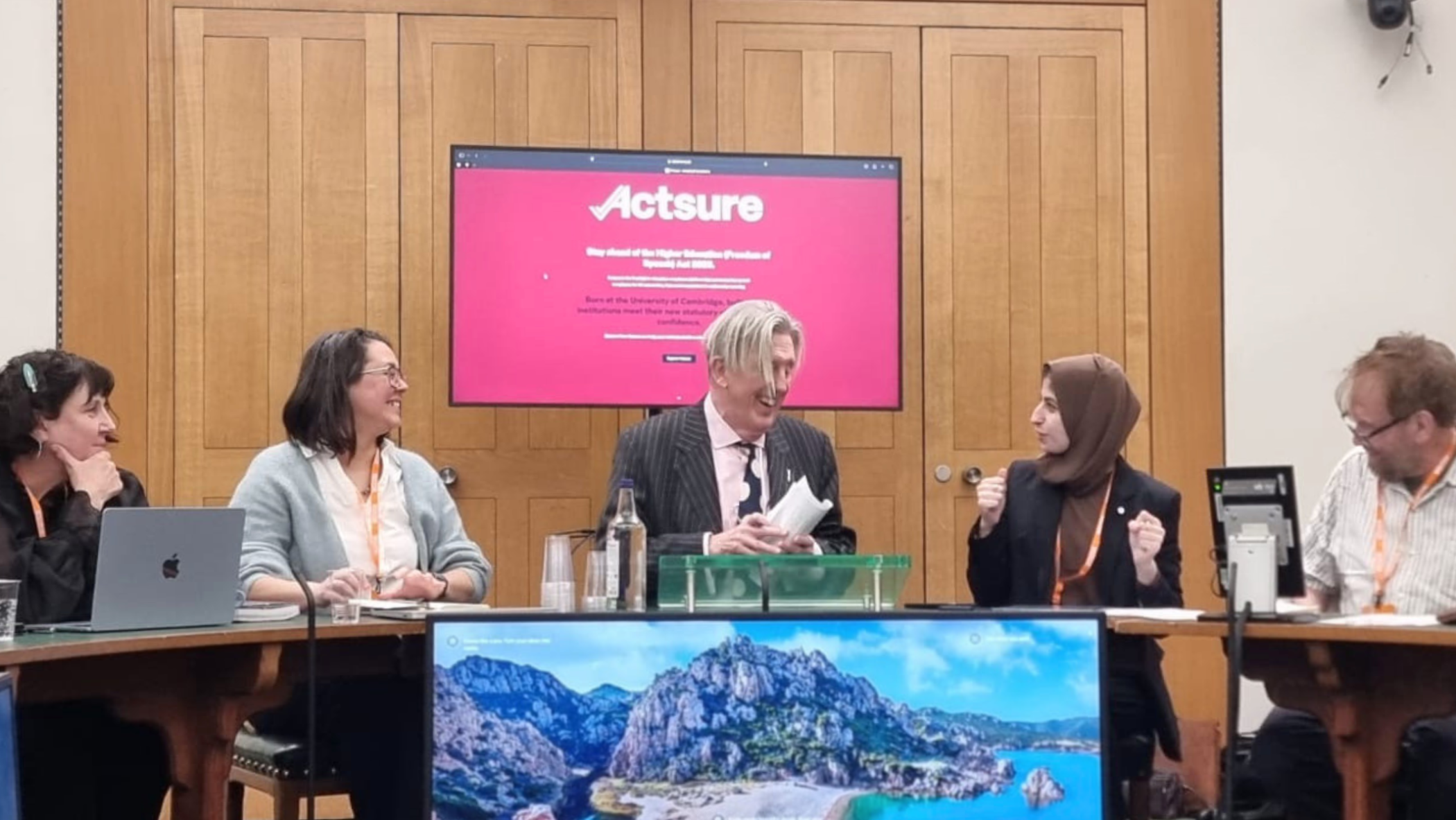
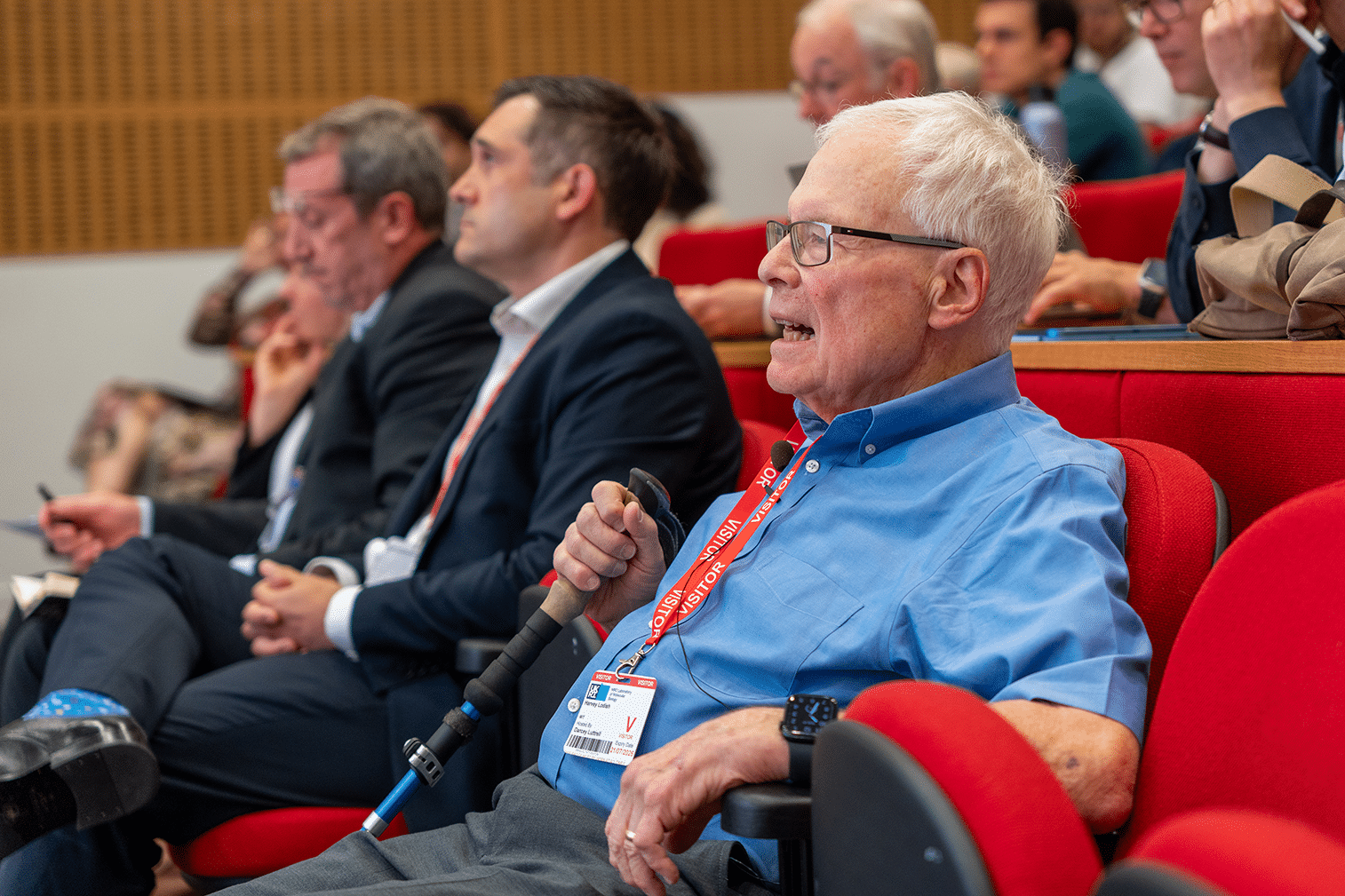
Actsure featuring at a Westminster free speech event on 11 February, hosted by the All-Party Parliamentary Group on Intergenerational Inquiry.

Actsure is shaped by an Advisory Board that has ample experience in the governance and free speech field, such as Professor Dr. Alison Scott-Baumann, from SOAS, University of London, Professor Simon Goldhill from University of Cambridge, Professor Adam Habib Vice-Chancellor of SOAS University of London, Dr Tyler Denmead from University of Cambridge, Professor Jo-Anne Dillabough, University of Cambridge, Gary McKeone is Warden of St George’s House, Windsor Castle and Jamal Badree, legal consultant, researcher and co-founder of Actsure.
Interested in strengthening free speech compliance and risk visibility in your institution? Explore how Actsure supports legal and compliance teams here, or get in touch with the team at info@actsure.co.uk to discuss a pilot.